Camille Pissarro sanatçısının Study at Pontoise eseri hakkında uzman analizi
Tarz: Impressionism · Tür: landscape
Expert Analysis: "Study at Pontoise" by Camille Pissarro
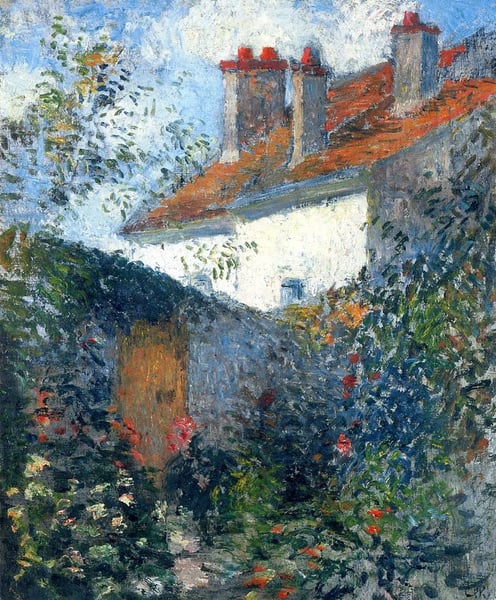
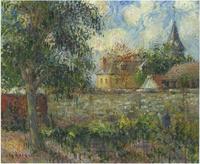
As a foundational work of Impressionism, Pissarro's Study at Pontoise exemplifies the movement's radical break from academic convention. Painted en plein air in the rural village of Pontoise, where the artist lived from 1866 to 1883, this landscape captures the transient effects of light and atmosphere through rapid, broken brushstrokes and a high-keyed palette.
Significance within the Period:
-
Bridge to Impressionism: Pissarro, often called the "father of Impressionism," used works like this to challenge the rigid composition and dark tonalities of the Barbizon School. The "study" quality—loose, unfinished by academic standards—was a deliberate embrace of spontaneity, mirroring the Impressionist belief that a painting should record a fleeting moment.
-
Harmony of Man and Nature: Unlike the dramatic landscapes of Romanticism, Pissarro’s scene is quietly domestic. Fields, farmhouses, and sloping hills are rendered with equal attention, emphasizing the serene rhythm of rural life. This reflects the Impressionist focus on modern, everyday subjects rather than historical or mythological themes.
-
Technical Innovation: Pissarro applied paint in small, visible dabs of pure color (e.g., greens, ochres, soft blues) that blend optically when viewed from a distance. This method, which he later shared with younger artists like Cézanne and Gauguin, directly opposed the smooth finish of the French Academy and paved the way for Post-Impressionism.
Why This Piece Matters: Study at Pontoise is not a finished exhibition piece but a vital document of Impressionist practice. It reveals Pissarro’s role as both a practitioner and a teacher—a calm observer who transformed a humble countryside view into a laboratory of light, color, and modern perception.
Museum / Gallery
Tür
Stil
Görsel olarak benzer
İlişkili kompozisyon ve renk paletine sahip 20 eser
Party wall
Paul Gauguin
House and Garden at Saint-Cirq-Lapopie
Henri Martin
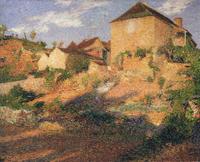
The old house
Henri Martin
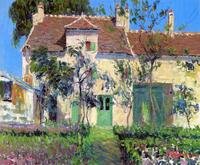
The Garden Behind the House
Gustave Loiseau
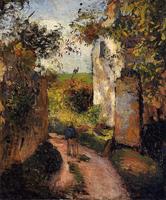
A Peasant in the Lane at Hermitage, Pontoise
Camille Pissarro
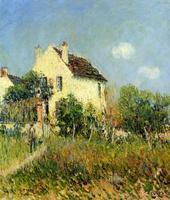
Veslez
Gustave Loiseau
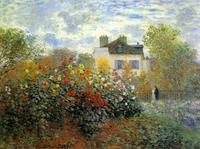
The Garden of Monet at Argenteuil
Claude Monet
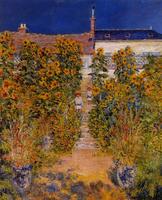
The Artist's Garden at Vetheuil
Claude Monet
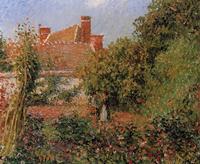
Kitchen Garden in Eragny, Afternoon
Camille Pissarro
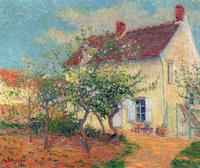
House in the Country
Gustave Loiseau
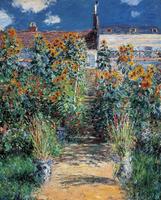
The Garden at Vetheuil
Claude Monet
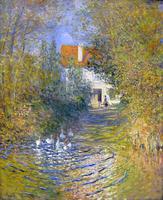
Geese in the creek
Claude Monet
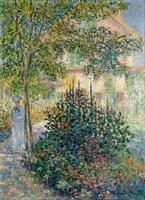
Camille Monet in the Garden at the House in Argenteuil
Claude Monet
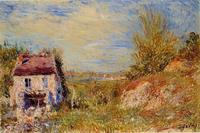
Abandoned House
Alfred Sisley
Essoyes Landscape
Pierre-Auguste Renoir
Azaleas
John Henry Twachtman
Child in a Walled Garden, Giverny
Lilla Cabot Perry
Summer House Garden
Max Slevogt
Farm in Normandy
Gustave Loiseau
Geese on the farm
Paul Gauguin