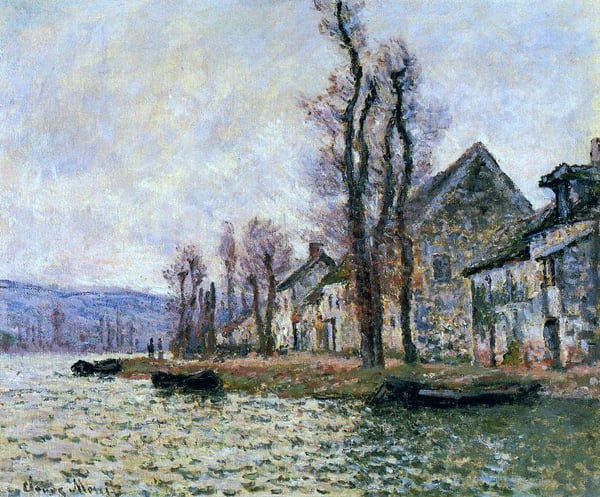
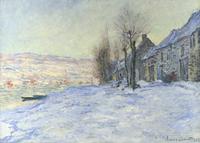
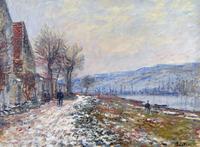
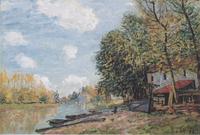
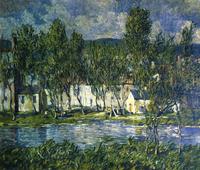
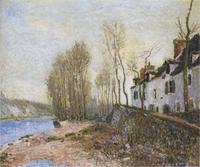
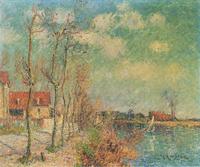
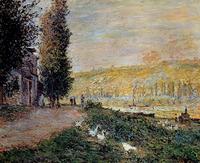
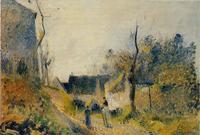
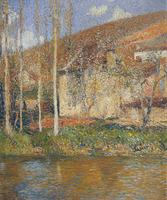
Based solely on the supplied facts, the significance of "The Bend of the Seine at Lavacourt, Winter" lies in its embodiment of Impressionist principles within the landscape genre. As a winter scene, it exemplifies the movement’s commitment to capturing transient atmospheric effects—specifically, the muted light, snow-covered ground, and frozen reflections typical of the season. Monet’s choice of a river bend allows for an exploration of shifting perspectives and the interplay of water, ice, and sky, all rendered with the loose brushwork and vibrant, often unexpected color contrasts that define Impressionism. This work demonstrates how the artist transformed a familiar, everyday vista into a study of light and temperature, challenging the static, idealized landscapes of earlier academic traditions.