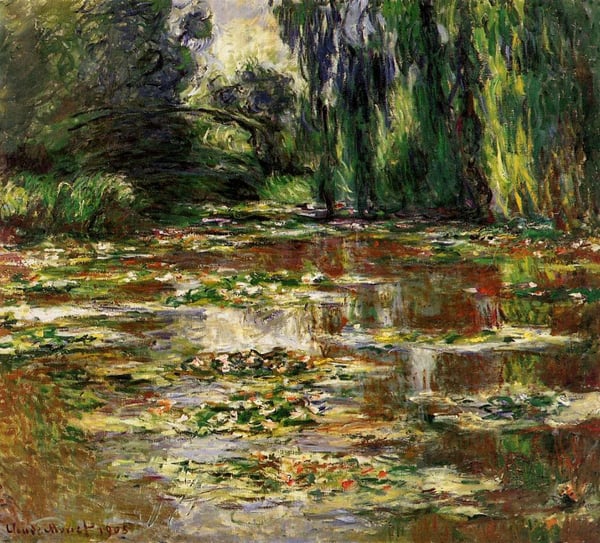
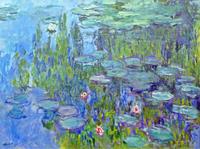
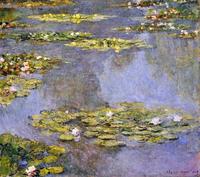
"The Japanese Bridge (The Bridge over the Water-Lily Pond)" is a landscape painting by Claude Monet, a leading figure of Impressionism. The work’s significance lies in how it encapsulates the core tenets of the Impressionist style through genre painting: it rejects precise, academic detail in favor of capturing the fleeting effects of light, color, and atmosphere. As a landscape, it emphasizes the artist’s immediate visual perception—the play of sunlight on water, the diffused reflections, and the shimmering surface of the pond. The bridge itself becomes a compositional anchor, yet the broken brushwork and vibrant, unblended hues dissolve form into a tapestry of sensation. This approach marks a radical shift from earlier landscape traditions, making the painting a quintessential example of how Impressionism transformed nature into a subjective, sensory experience. Additionally, the title’s mention of a “Japanese” bridge aligns with the period’s fascination with Japanese art, indicating a cross-cultural influence that enriched Impressionist compositions.