Analisi esperta di The River Epte di Claude Monet
Stile: Impressionism · Genere: landscape
Expert Art Historical Analysis: "The River Epte" by Claude Monet
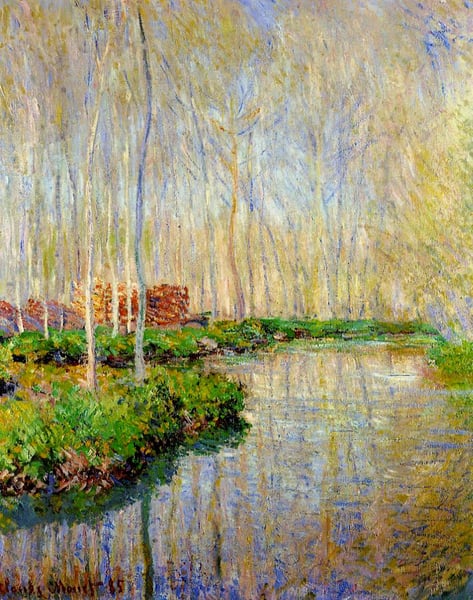
Claude Monet’s The River Epte (likely one of his many views of the Epte River near Giverny) stands as a quintessential example of Impressionism’s revolutionary approach to landscape. The work is significant not merely as a scenic depiction, but as a masterclass in the movement’s core preoccupations: light, atmosphere, and the transient moment.
Significance within Impressionism
-
Capturing the Ephemeral
Monet’s treatment of the Epte River exemplifies the Impressionist goal of rendering l’impression—the fleeting perception of a scene under specific atmospheric conditions. Rather than detailing the river’s fixed topography, he focuses on the play of light across the water’s surface, the shifting reflections of sky and foliage, and the momentary shimmer of ripples. This elevates the act of seeing itself above the subject. -
Serial Observation
The River Epte was a recurring motif in Monet’s later work, particularly after his move to Giverny in 1883. By painting the same site at different times of day and in varied weather, Monet transformed a local landscape into a laboratory for studying chromatic change. The River Epte belongs to this serial approach—each version underscores how light dissolves and recomposes form, advancing the Impressionist belief that no two moments are visually identical. -
Brushwork and Color
Monet’s distinctive broken brushwork—visible, rapid strokes of pure, unblended color—liberates the landscape from academic finish. In this piece, dabs of blue, green, violet, and pale yellow build the river’s surface, while touches of pink and orange hint at sunset or morning glow. The optical mixing of these hues on the viewer’s retina creates a vibrant, pulsating effect that mimics natural light more faithfully than traditional glazes. -
Rejection of Perspective
Unlike earlier landscape conventions, Monet flattens the picture plane. The riverbank, water, and sky merge into a near-abstract tapestry of color. This flattening anticipates later modernist developments, showing how Impressionism paved the way for recognizing the painted surface itself as a subject—not just a window onto nature.
Legacy and Influence
The River Epte is significant because it marks a mature phase where Monet moved beyond mere representation toward a poetics of sensation. It encapsulates the Impressionist triumph: transforming a humble tributary in rural France into an enduring meditation on how we perceive the natural world—a legacy that resonates in every subsequent movement that privileges subjective experience over objective recording.
Visivamente simili
20 opere con composizione e palette affini
The Banks of the River Epte at Giverny
Claude Monet
Poplars, Autumn, Pink Effect
Claude Monet
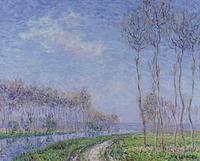
Trees by the River
Gustave Loiseau
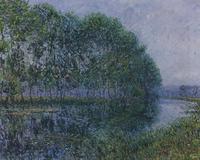
By the Eure River in Summer
Gustave Loiseau
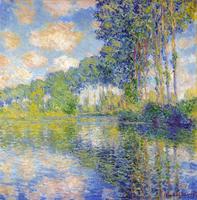
Poplars on the Epte
Claude Monet
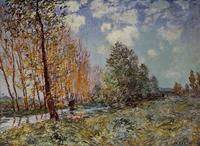
By the River
Alfred Sisley
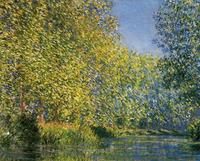
Bend in the River Epte
Claude Monet
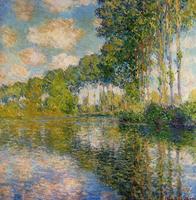
Poplars On The Banks Of The River Epte
Claude Monet
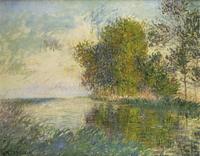
The Normandy River
Gustave Loiseau
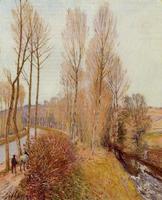
Path along the Loing Canal
Alfred Sisley
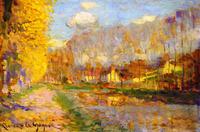
Canal du Loing, Moret
Clarence Gagnon
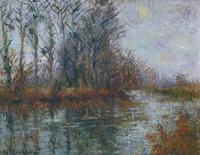
By the Eure River
Gustave Loiseau
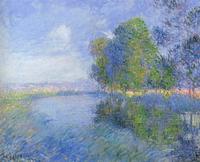
Trees in Bloom
Gustave Loiseau
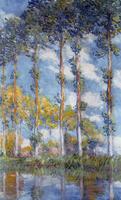
Poplars
Claude Monet
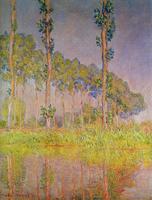
Three Trees in Spring
Claude Monet
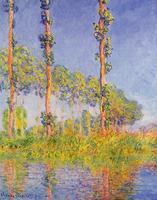
Three Trees, Autumn Effect
Claude Monet
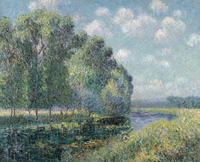
By the Eure River in Spring
Gustave Loiseau
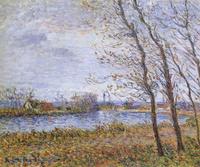
Port Pinche at the Turn of the Seine
Gustave Loiseau
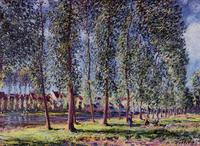
Lane of Poplars at Moret
Alfred Sisley
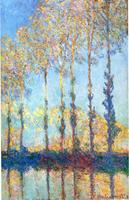
Poplars on the Banks of the Epte
Claude Monet