Expertenanalyse zu Alfred Sisleys Path along the Loing Canal
Stil: Impressionism · Genre: landscape
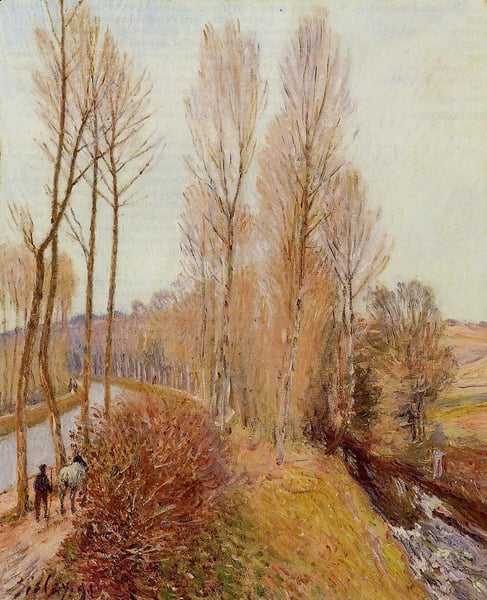
Alfred Sisley’s "Path along the Loing Canal" is a quintessential example of High Impressionism, executed during the artist’s mature period when he had fully committed to capturing the subtle, fleeting effects of light and atmosphere. Painted in the early 1890s near his home in Moret-sur-Loing, the work demonstrates Sisley’s lifelong devotion to landscape as a vehicle for pure optical sensation.
Significance within Impressionism:
-
Plein-air fidelity – Sisley worked directly from nature, here depicting a humble path beside the canal. The composition is balanced yet informal, with the diagonal line of the path leading the eye into a luminous vista of water and sky. This structure avoids dramatic perspective, instead emphasizing the gentle, quotidian beauty of the French countryside.
-
Atmospheric nuance – The painting is especially noted for its refined handling of light. Soft, diffused sunlight filters through a muted sky, casting pale blue and gray reflections on the canal’s surface. Sisley’s palette is restrained—silver-greens, ochres, and powdery blues—yet alive with small touches of white and lavender that suggest vibrating air. This mastery of tonal harmonies distinguishes Sisley from his more chromatic peers like Monet.
-
Brushwork and texture – Short, broken strokes of color define foliage, water, and path alike, but Sisley maintains a sense of form without dissolving subject matter entirely. The brushwork is lyrical but controlled, capturing the rustle of leaves and the shimmer of ripples without sacrificing the canal’s quiet stillness. This balance between atmosphere and structure marks Sisley as a purist of Impressionist landscape philosophy.
-
Late-period synthesis – By the 1890s, Impressionism was evolving, but Sisley remained steadfast. Path along the Loing Canal represents a culmination of his research into the interplay of water, sky, and earth. Unlike Monet’s bold color experiments or Pissarro’s social overtones, Sisley’s work offers a serene, almost meditative focus on nature’s transient moods. Here, the modest path becomes a threshold to a world of perceptual immediacy—the true subject of Impressionism.
In summary, the painting is significant for its exemplary Impressionist technique—especially its nuanced depiction of water and light—and for encapsulating Sisley’s unique contribution: a quiet, deeply felt poetry of ordinary landscapes that remains one of the movement’s purest achievements.
Visuell ähnlich
20 Werke mit ähnlicher Komposition und Farbpalette
Trees by the River
Gustave Loiseau
Barges on the Loing, Morning Effect
Francis Picabia
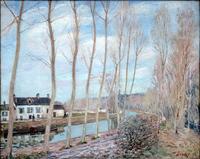
River Loing
Alfred Sisley
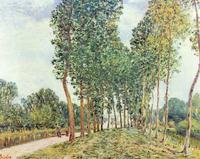
Banks of the Loing at Moret
Alfred Sisley
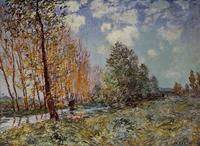
By the River
Alfred Sisley
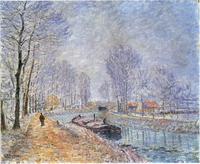
The Seine at Pontoise
Gustave Loiseau
Lane of Poplars at Moret
Alfred Sisley
Autumn Effect
Francis Picabia
Lane of Poplars on the Banks of the Loing
Alfred Sisley
Canal du Loing, Moret
Clarence Gagnon
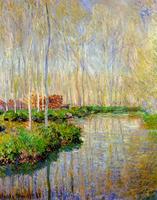
The River Epte
Claude Monet
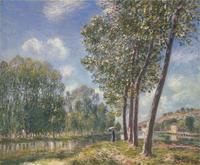
Spring Sunshine on the Loing
Alfred Sisley
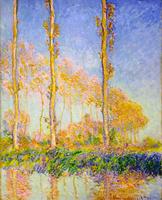
Poplars, Autumn, Pink Effect
Claude Monet
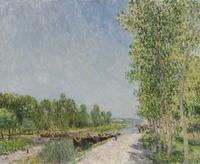
On the Banks of the Loing Canal
Alfred Sisley
Landscape in Snow
Gustave Loiseau
Small Meadows in Spring
Alfred Sisley
Near the Seine at By
Alfred Sisley
Banks of the Loing
Alfred Sisley
The Three Trees, Autumn
Claude Monet
Argenteuil, Seen from the Small Arm of the Seine
Claude Monet