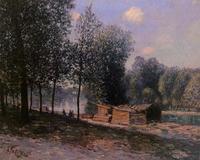
Analysis of Claude Monet’s The Grenouillère
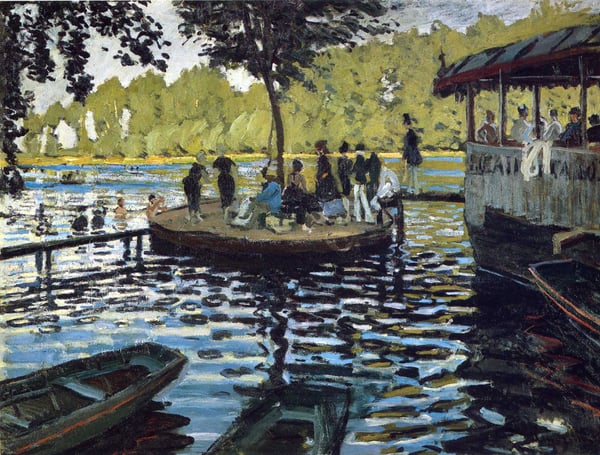
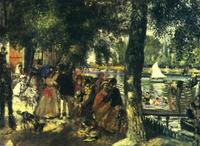
As a genre painting executed in the Impressionist style, The Grenouillère holds a defining place in the movement’s broader mission. The work captures a popular outdoor leisure site on the Seine—a buoyant, modern social scene that aligns perfectly with Impressionism’s fascination with contemporary life.
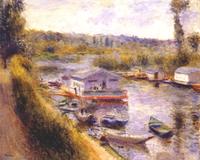
Significance lies in how Monet and his peers rejected the grand narratives of academic painting (history, mythology, religion) in favor of everyday, transient moments. Here, the subject—a bustling floating café and bathing spot—is treated not as a mere anecdote, but as a vehicle for revolutionary artistic concerns: the play of natural light on water, the dappled reflection of trees and figures, and the atmospheric immediacy of a sunny afternoon.
The painting’s loose, broken brushwork—typical of Impressionism—dissolves distinct forms into vibrant patches of color, prioritizing optical sensation over precise detail. This technique, paired with the genre itself, asserts that a casual riverside gathering is as worthy of serious study as any classical tableau. In The Grenouillère, Monet transforms a popular pastime into a manifesto for capturing the fleeting, sensory experience of modernity.