
Expert analysis of Claude Monet’s Water Lilies
Style: Impressionism · Genre: flower painting
Analysis of "Water Lilies" by Claude Monet
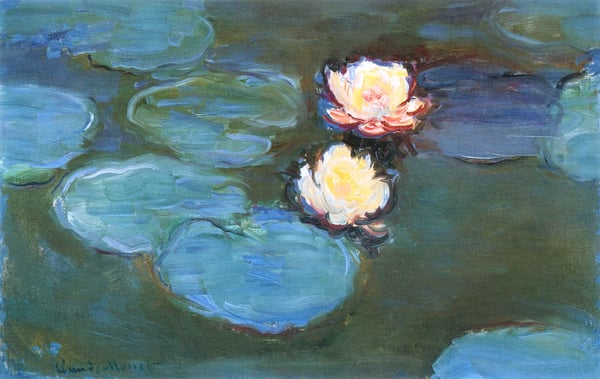
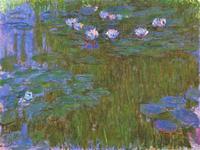
As a landmark of Impressionism, Claude Monet’s Water Lilies transcends the traditional genre of flower painting to become a radical study of light, color, and transience. Executed in the style that defined his late career, this work exemplifies the Impressionist commitment to capturing the fleeting effects of atmosphere and the sensory experience of a single moment.
Significance within Impressionism
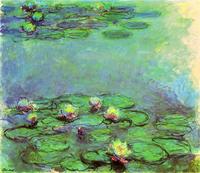
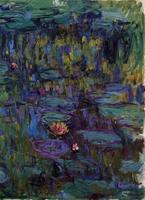
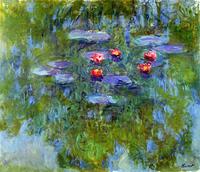
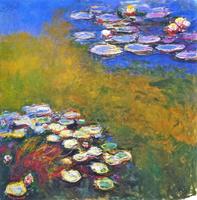
Monet’s series of Water Lilies is epochal within the Impressionist movement for its dissolution of form and its relentless pursuit of optical truth. Rather than presenting a fixed botanical portrait, Monet treats the water surface as a mirror for the sky, clouds, and surrounding foliage, blurring the boundary between subject and reflection. The canvas becomes a field of vibrating color patches—layered strokes of pink, violet, green, and blue—that coalesce only when viewed from a distance. This technique directly embodies the Impressionist core: prioritizing the artist’s immediate perception over academic finish. The work’s large, immersive scale further pushes the boundaries of the genre, inviting the viewer into a contemplative space that dissolves traditional perspective—a radical step toward abstraction that influenced modernism.
Significance within the flower painting genre
In the context of flower painting, Monet’s Water Lilies represents a decisive break from still-life conventions. Earlier flower painters (e.g., Jan van Huysfeld or Fantin-Latour) emphasized detail, symbolic meaning, or decorative arrangement. Monet instead uses the lily pond as a vehicle for pure optical sensation: the flowers are nearly indistinguishable from their shimmering background. By focusing on the aquatic environment rather than isolated blooms, he transforms the genre into an exploration of atmosphere, reflection, and the play of natural light across a living surface. The result is not a picture of flowers but a record of how flowers and water are transformed by ever-changing daylight—a quintessentially Impressionist revolution within a traditional subject.
Museum / Gallery
Visually similar
20 works with related composition and palette
Water Lilies
Claude Monet
Water Lilies, Evening Effect
Claude Monet
Water Lilies, Pink
Claude Monet
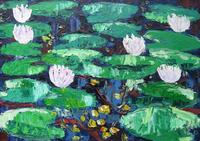
Water-Lilies
Endre Bartos
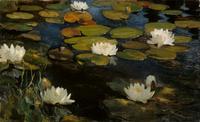
Water Lilies, Study for the Youth and a Mermaid
Albert Edelfelt
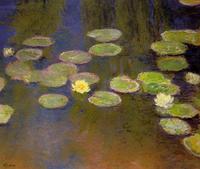
Water Lilies
Claude Monet
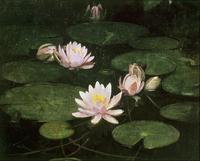
Waterlilies
Abbott Handerson Thayer
Water Lilies
Claude Monet
Water Lilies
Claude Monet
Water Lilies
Claude Monet
Water Lilies
Claude Monet
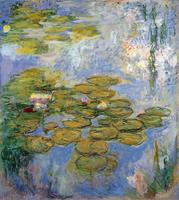
Water Lilies
Claude Monet
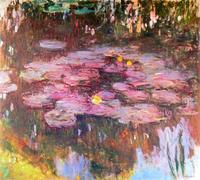
Water Lilies
Claude Monet
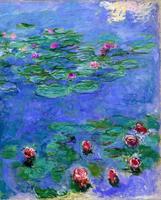
Water Lilies Red
Claude Monet
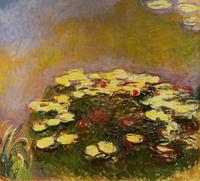
Water Lilies
Claude Monet
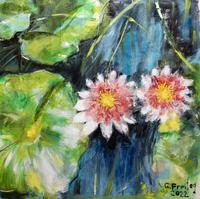
Seerosen
Gazmend Freitag
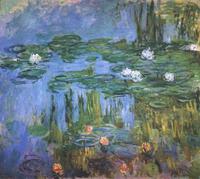
Water Lilies
Claude Monet
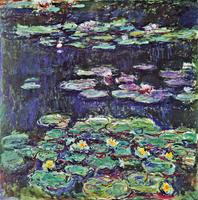
Water Lilies
Claude Monet
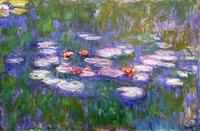
Water Lilies
Claude Monet
Water Lilies
Claude Monet