
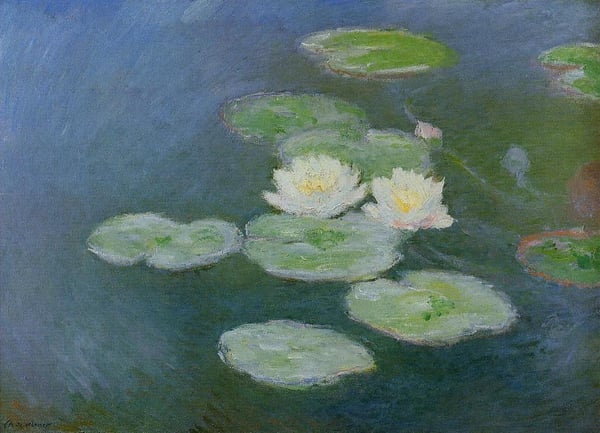
Expert analysis of Claude Monet’s Water Lilies, Evening Effect
Style: Impressionism · Genre: flower painting
Expert Analysis: "Water Lilies, Evening Effect" by Claude Monet
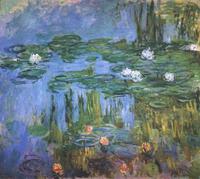
As a defining work of the Impressionist movement, Claude Monet’s Water Lilies, Evening Effect (c. 1900–1905) exemplifies the artist’s radical shift from representing objective reality to capturing sensory experience. While its genre is a flower painting, its true significance lies in how Monet transforms a familiar subject—the lily pond at his Giverny garden—into a meditation on light, time, and perception.
Significance within Impressionism
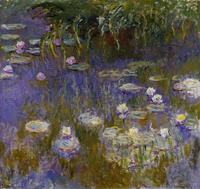
The painting belongs to Monet’s monumental Water Lilies series, a late-career obsession that pushed Impressionist principles to their limits. Here, the artist abandons traditional composition (no horizon line, no central focal point) in favor of an all-over, flattened surface. The “evening effect” is paramount: Monet dissolves the pond’s surface into shimmering patches of violet, deep blue, and lavender, punctuated by pale pink lilies. The brushwork is rapid and disjointed—a hallmark of Impressionism—but here it becomes almost abstract, prioritizing the sensation of twilight over botanical accuracy.
Innovations in Color and Light
Monet’s analysis of light at different times of day was central to his practice. In Evening Effect, he juxtaposes complementary colors (blue-violet against pink-orange) to create a vibrating, atmospheric glow. The water reflects the sky’s last light, while the lilies emerge as ghostly flecks of pigment. This approach demonstrates how Impressionism evolved from documenting outdoor scenes to exploring subjective optical phenomena. The painting’s lack of strong shadows or outlines further emphasizes the fluid, transient nature of evening.
Legacy and Influence
This work marks a turning point toward modern abstraction. By reducing the lily pond to a field of color and texture, Monet prefigures the non-representational art of the 20th century. The series as a whole—especially the large-scale Nymphéas panels—challenges viewers to immerse themselves in pure perception. Water Lilies, Evening Effect remains significant not merely as a flower painting, but as a pioneering experiment in how art can encode the passage of time and the ephemeral beauty of nature.
Visually similar
20 works with related composition and palette
Water Lilies
Claude Monet
Water Lilies, Pink
Claude Monet
Water Lilies
Claude Monet
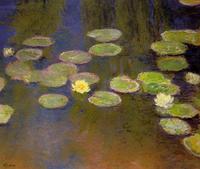
Water Lilies
Claude Monet
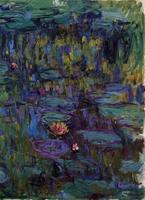
Water Lilies
Claude Monet
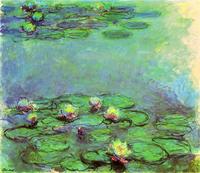
Water Lilies
Claude Monet
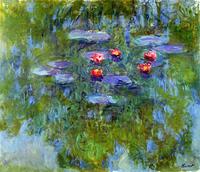
Water Lilies
Claude Monet
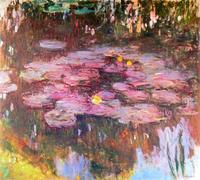
Water Lilies
Claude Monet
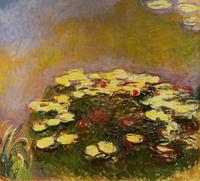
Water Lilies
Claude Monet
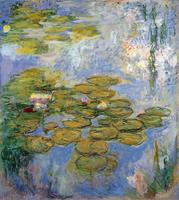
Water Lilies
Claude Monet
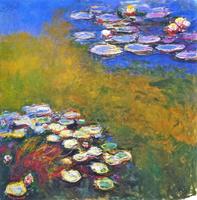
Water Lilies
Claude Monet
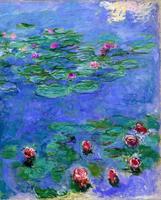
Water Lilies Red
Claude Monet
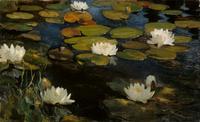
Water Lilies, Study for the Youth and a Mermaid
Albert Edelfelt
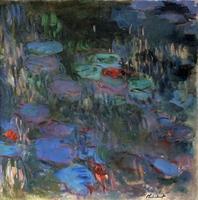
Water Lilies, Reflections of Weeping Willows (right half)
Claude Monet
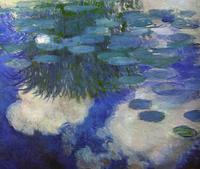
Water Lilies
Claude Monet
Water Lilies, Yellow and Lilac
Claude Monet
Water Lilies
Claude Monet
Water Lilies
Claude Monet
Water Lily Pond
Claude Monet
Water Lilies
Claude Monet