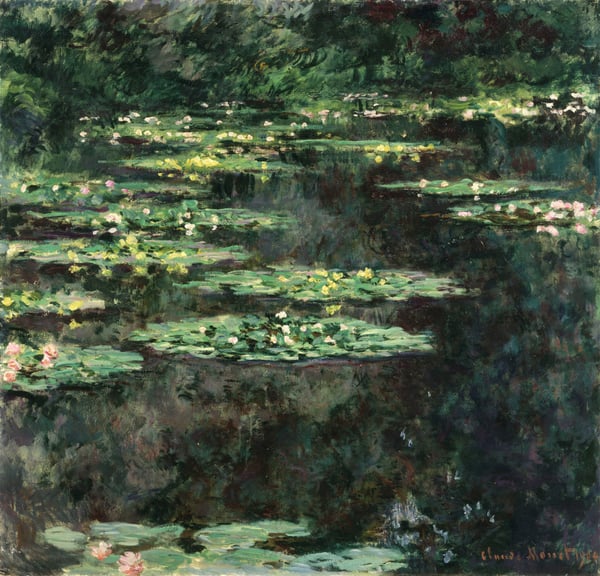
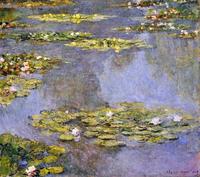
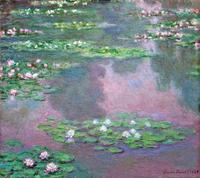
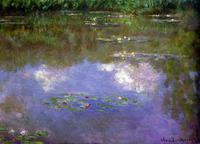
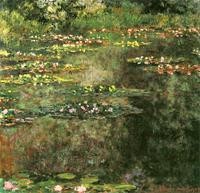
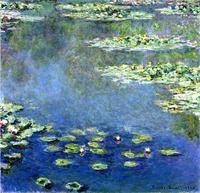
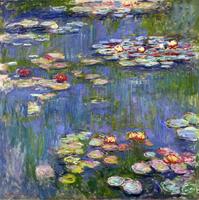
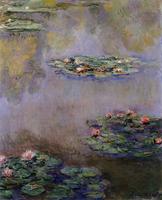
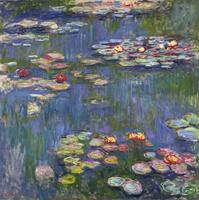
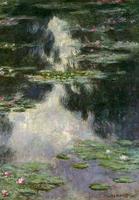
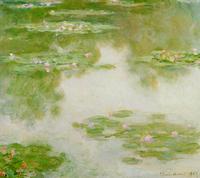
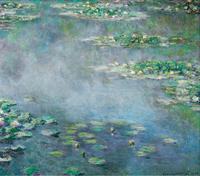
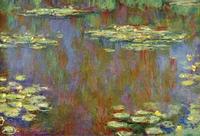
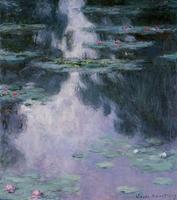
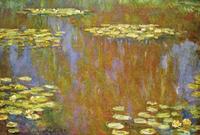
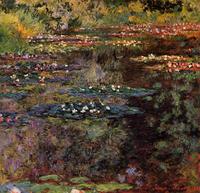
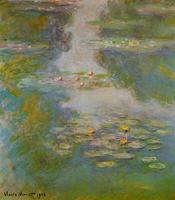
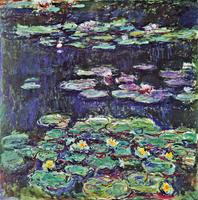
The "Water Lilies" series by Claude Monet is a revolutionary landmark within Impressionism and the flower painting genre. Rather than depicting a single bloom or a static bouquet, Monet transforms the humble pond into an immersive, atmospheric field of color and light. His signature loose brushwork and broken color technique dissolve the boundaries between water, sky, and lilies, capturing the fleeting reflections of clouds and reeds on the pond’s surface. This series is significant for pushing Impressionist ideas beyond simple “impressions” into a near-abstract, all-over composition that anticipates 20th‑century abstraction. By repeatedly painting the same subject under changing light conditions, Monet demonstrates that a flower painting can be a record of perceptual experience rather than a botanical study, making the series a seminal example of how Impressionism redefined the very act of seeing.