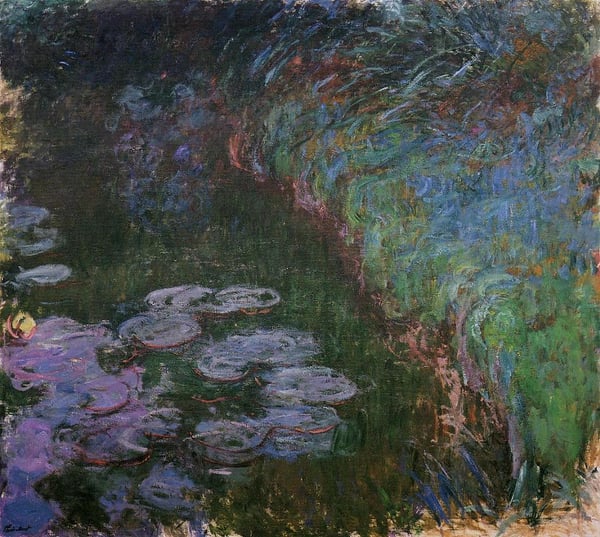
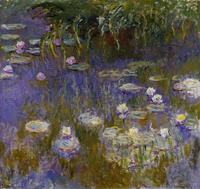
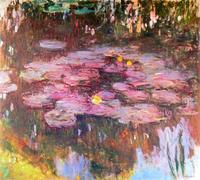
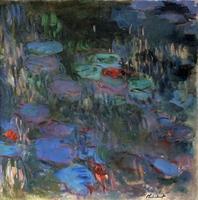
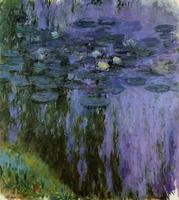
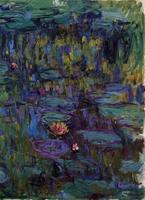
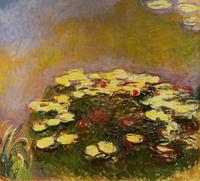
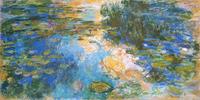
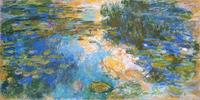
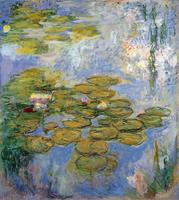
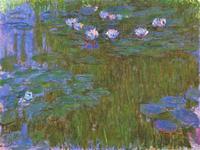
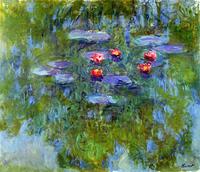
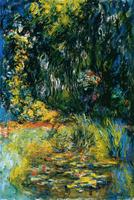
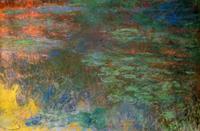
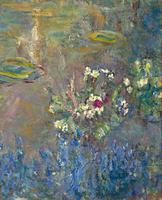
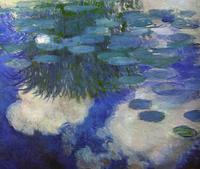
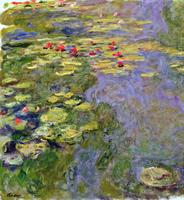
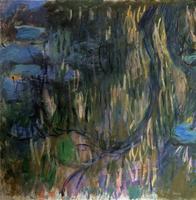
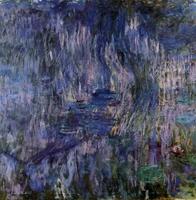
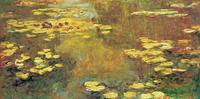
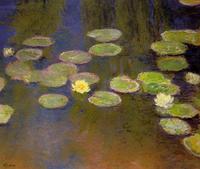
As an Impressionist flower painting, Claude Monet's Water Lilies represents a revolutionary departure from traditional floral still lifes. The work’s significance lies in its embodiment of Impressionism’s core principles: the fleeting effects of light, the vibrancy of broken color, and the capture of atmospheric conditions over precise botanical detail. By focusing on water lilies floating on a pond, Monet transforms the genre of flower painting from a static, studio-bound study into an immersive, open-air experience. The painting emphasizes how light plays across the surface of water and petals, dissolving solid forms into shimmering reflections. This approach—reducing the subject to patches of luminous color and soft edges—not only defined the height of Impressionist innovation but also paved the way for later abstraction, where the artist’s sensory perception of nature becomes as important as the subject itself.