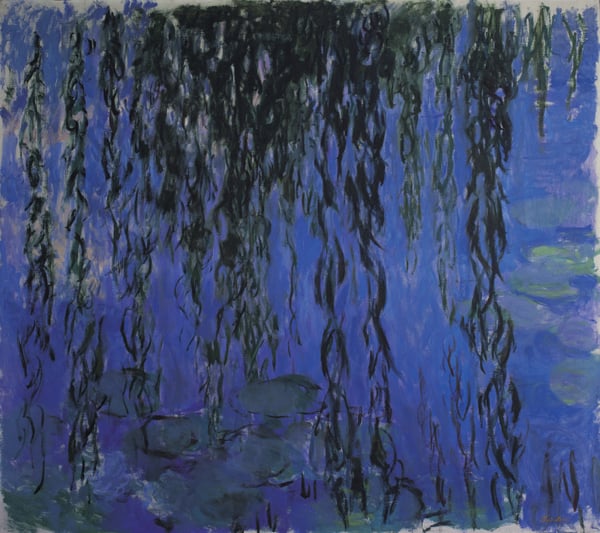
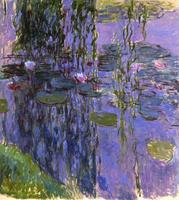
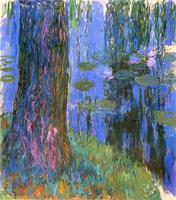
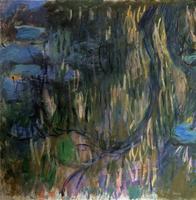
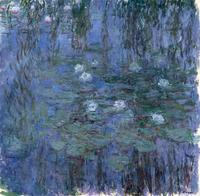
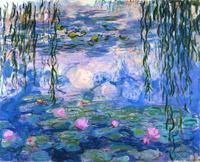
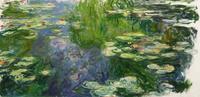
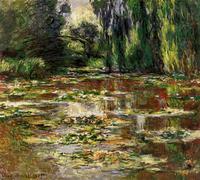
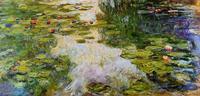
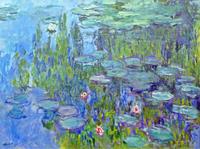
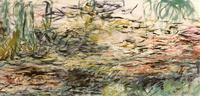
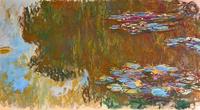
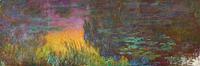
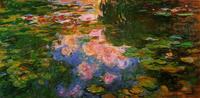
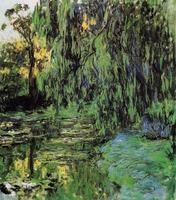
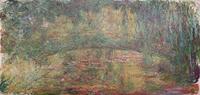
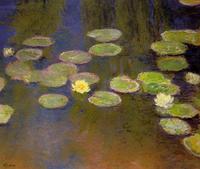
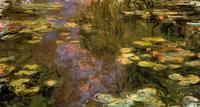
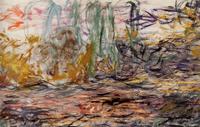
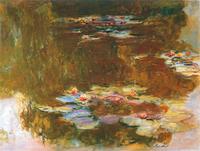
Claude Monet’s Water Lilies and Weeping Willow Branches is a quintessential example of Impressionism’s late, more abstract phase. Executed in the flower‑painting genre, the work goes beyond simple floral representation to become a meditation on light, reflection, and atmosphere. The weeping willow’s cascading branches interweave with the floating water lilies, dissolving form into a tapestry of fragmented brushstrokes and shimmering color. This compositional choice captures the ephemeral play of sunlight on water—a hallmark of Impressionism—while the absence of a distinct horizon or focal point draws the viewer into a boundless, immersive scene. The painting’s significance lies in how it pushes Impressionist techniques toward pure sensory experience: the canvas becomes a record of a single, fleeting moment, where the boundary between subject and reflection blurs, inviting contemplation of nature’s transient beauty.