Edgar Degas の Study for a Portrait の専門的な分析
スタイル:Impressionism · ジャンル:sketch and study
Expert Analysis: "Study for a Portrait" by Edgar Degas
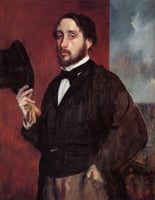
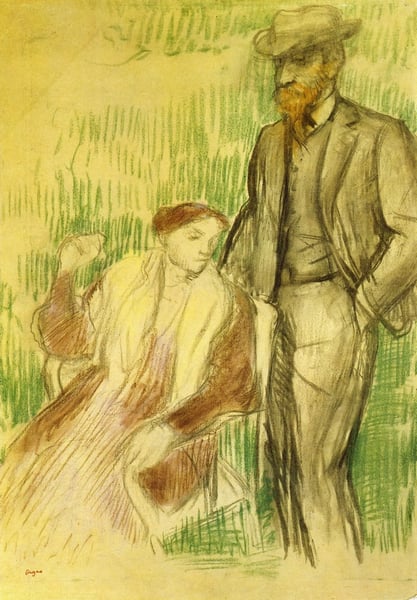
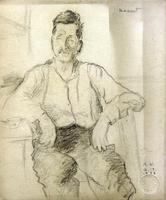
Edgar Degas’s Study for a Portrait exemplifies the Impressionist commitment to capturing fleeting moments and the spontaneity of everyday life—here, translated into the intimate, preparatory language of a sketch. While many Impressionists worked directly from life to achieve a sense of immediacy, Degas often blurred the line between finished canvas and preliminary study, elevating the sketch to an autonomous work of art.
Significance within Impressionism and period context:
-
Process over polish: In an era when academic finish was prized, Degas’s study foregrounds the artist’s hand and the act of seeing. The loose, rapid strokes—typical of his working method—convey a sense of movement and psychological immediacy. This aligns with Impressionism’s broader rejection of rigid studio conventions in favor of capturing transient effects of light, gesture, and attitude.
-
Genre as innovation: As a “sketch and study,” the work embodies Impressionism’s radical revaluation of the unfinished. Degas often treated his studies as finished statements, suggesting that the raw energy of a first impression could be more truthful than a highly polished portrait. This piece likely records a specific moment of observation, preserving the sitter’s unguarded presence.
-
Degas’s unique portrait approach: Unlike many Impressionists who focused on landscapes or leisure scenes, Degas was a master of portraiture and the human figure. His studies reveal his obsessive attention to anatomical structure, posture, and psychological depth. In Study for a Portrait, the economy of line and tone suggests a mind rapidly synthesizing form and character—a hallmark of his mature style.
Why it matters:
This work is significant as a document of Degas’s creative process, demonstrating how Impressionist ideals of spontaneity and modernity could be applied to the most traditional of genres—the portrait. It also challenges the conventional hierarchy of genres, asserting that a sketch can possess as much artistic weight as a finished painting. Through its deliberate incompleteness, the study invites viewers into the artist’s moment of discovery, making visible the very act of seeing that lies at the heart of Impressionism.
Museum / Gallery
視覚的に類似
構図やパレットが近い作品 20 件
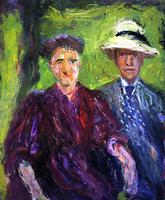
Double Portrait (green background)
Richard Gerstl
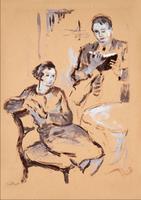
Bortnyik Sándor Felolvasás
Sandor Bortnyik
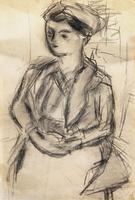
Czóbel Béla Nő Kalapban , Szén Papír, 60x40cm
Bela Czobel
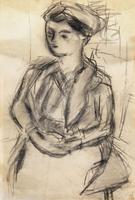
Czóbel Béla Women.
Bela Czobel
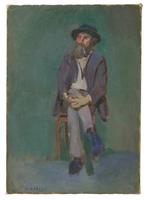
Homme Assis
Henri Matisse
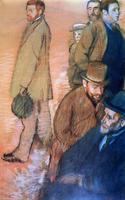
Six Friends of the Artist
Edgar Degas
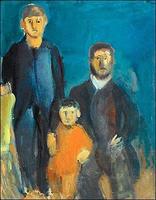
Father and son
George Bouzianis
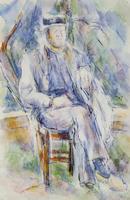
Peasant in a Straw Hat
Paul Cezanne
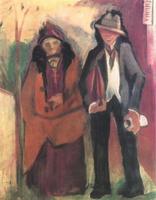
French Poet and His Mother
Istvan Farkas
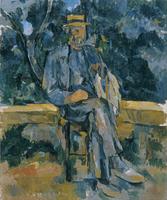
Portrait of Peasant
Paul Cezanne
Munkás Fiú
Bela Czobel
Arne Cederholm Med Modellen
Magnus Enckell
Sin título
Joy Hester
Lucien Guitry and Granne Granier
Henri de Toulouse-Lautrec
Two Women in a Balcony Box
Vincent van Gogh
In Moulin Rouge
Henri de Toulouse-Lautrec
Self Portrait
George Bouzianis
Antikvariat in Prague
Maria Bozoky
Portrait of Mamut
Medi Wechsler Dinu
Woman in Pink Interior
Henri Matisse