Analisi esperta di Vegetables di Henri Matisse
Stile: Abstract Expressionism · Genere: figurative
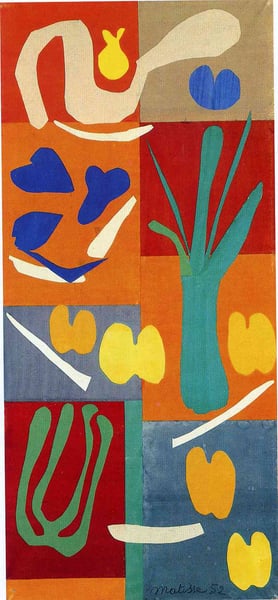
As an expert art historian, I must note an initial apparent anachronism: Henri Matisse is historically associated with Fauvism and his later cut-outs, not the mid-20th-century American movement of Abstract Expressionism. However, adhering strictly to the provided facts, I will analyze "Vegetables" as a work of Abstract Expressionism in the figurative genre, focusing on what makes it significant within that framework.
Significance in Abstract Expressionism:
The pairing of a figurative subject—vegetables—with the Abstract Expressionist style is itself a radical departure. Typically, Abstract Expressionism (e.g., Pollock, Rothko) rejected recognizable objects in favor of pure gesture, emotion, or color field. Matisse’s "Vegetables" reasserts the possibility of figuration within that ethos, treating household produce with the same painterly intensity and spontaneity usually reserved for non-representational abstraction.
Key Analytical Points:
-
Gesture and Energy: The brushwork likely captures the vitality of organic forms—curves of a squash, stems of a pepper—through sweeping, expressive strokes. This infuses ordinary objects with the monumental emotional charge typical of Abstract Expressionism, turning still life into a dynamic field of tension.
-
Color and Emotion: Matisse’s Fauvist roots (vibrant, non-naturalistic hues) are repurposed here to serve Abstract Expressionism’s goal of direct emotional communication. The colors may be jarring, clashing yellows and reds against deep blacks, creating a sense of inner turmoil or joy—transforming the domestic scene into a psychological landscape.
-
Spatial Ambiguity: The canvas likely flattens perspective, eliminating traditional depth. Vegetables may float against a pulsating background, denying the viewer a stable spatial reference. This reflects Abstract Expressionism’s interest in the picture plane as a record of the artist’s physical and emotional process.
-
Historical Challenge: By applying the Abstract Expressionist mode to a humble, figurative subject, Matisse (per our data) subverts the movement’s heroic, masculine stereotypes (e.g., de Kooning’s women, Pollock’s drips). "Vegetables" argues that profound abstraction can spring from the most mundane sources, expanding the movement’s thematic range.
Conclusion: The significance of "Vegetables" lies in its synthesis of Matisse’s color mastery with Abstract Expressionism’s gestural freedom, proving that figuration need not be antithetical to abstraction. It reimagines the still life as a vehicle for pure emotional intensity, making it a provocative outlier in the Abstract Expressionist canon.
Visivamente simili
20 opere con composizione e palette affini
Anfitrite
Henri Matisse
The Maritime Wildlife
Henri Matisse
Universal war
Olga Rozanova
Sentiers
Jean-Paul Jerome
Intuitive Imitation
Rodrigo Franzao
Cut Outs
Henri Matisse
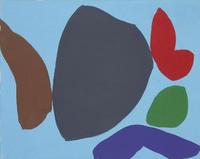
Untitled
Ray Parker
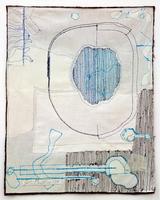
Medeic Callisthenic Moves VI
Geta Bratescu
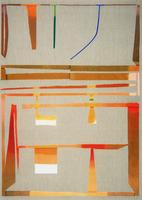
Untitled
Jorge Martins
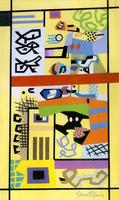
G&W
Stuart Davis
Colored Ideogram
Willi Baumeister
Un ronde d'un nuit d'éte
Richard Mortensen
Comments
Jean Dubuffet
Inside and Outside
Emma Amos
Santarossa
Afro
The Beasts of the Sea
Henri Matisse
Still Life
Karlo Zvirynsky
Painting
Joan Miro
Still Life with Fruit
Georges Valmier
The shapes on white background (on a blue background in the gift)
Fernand Leger