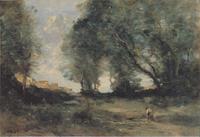
Expert Analysis: "Tall Trees at the Jas de Bouffan" by Paul Cézanne
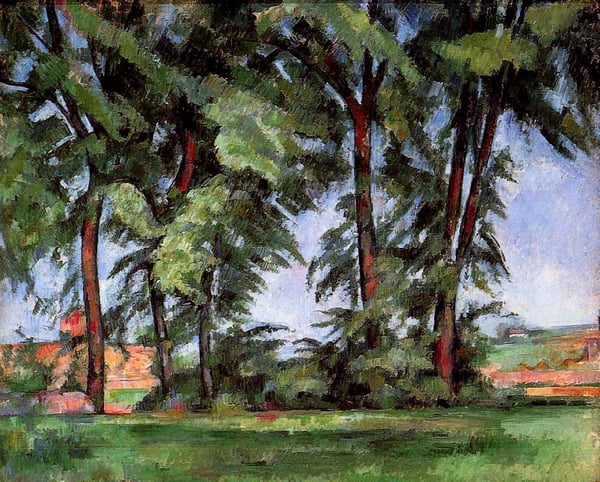
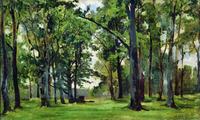
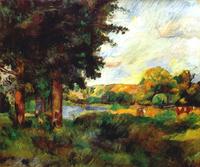
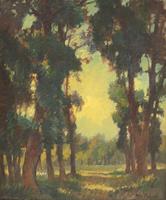
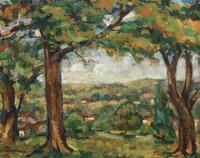
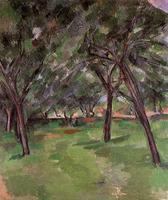
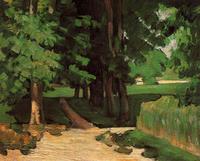
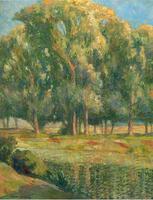
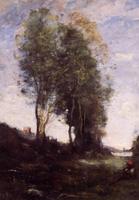
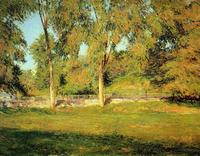
This landscape from Paul Cézanne’s mature period exemplifies the core concerns of Post-Impressionism through its bold structural composition and deliberate departure from naturalistic detail. While the scene depicts the artist’s family estate near Aix-en-Provence, the significance lies not in topographical accuracy but in Cézanne’s systematic construction of form. The tall trees rise as vertical, almost architectural masses, their trunks and foliage built from layered, parallel brushstrokes that emphasize volume and plane rather than atmospheric effect. This method—typical of his mature work—privileges underlying geometry, with the branches and sky divided into facets of color that push the landscape toward abstraction. As a Post-Impressionist piece, it rejects the transient light effects of Impressionism in favor of a more enduring, intellectual order. The painting’s impact on early modernism—particularly Cubism—stems directly from Cézanne’s mature innovations: here, the forest becomes a system of interlocking shapes, where color itself defines depth and structure.