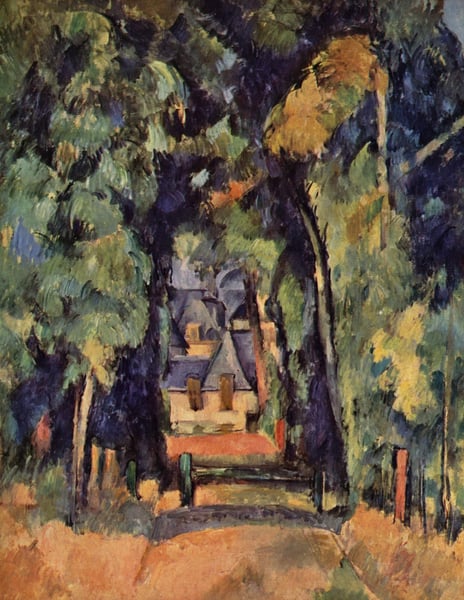
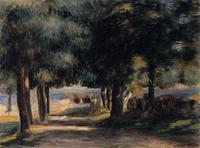
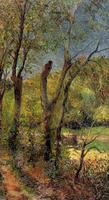
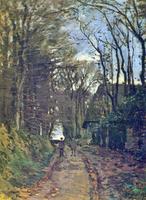
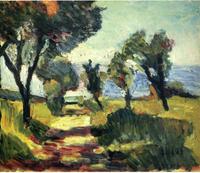
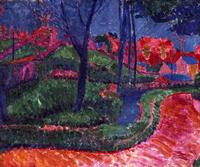
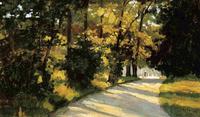
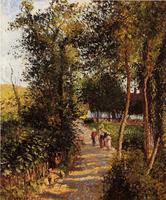
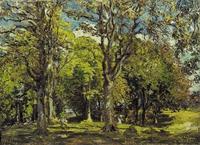
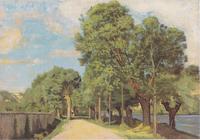
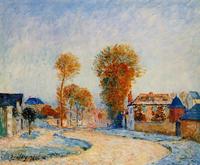
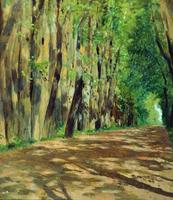
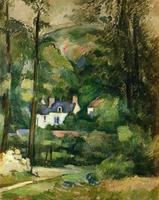
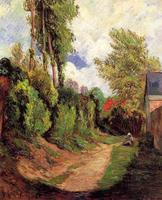
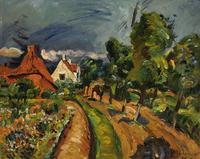
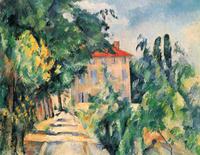
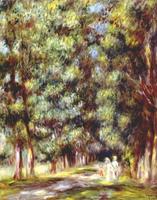
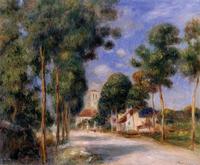
In "The Alley at Chantilly," Paul Cezanne demonstrates the hallmarks of his mature Post-Impressionist style, moving beyond the fleeting effects of light championed by the Impressionists to explore underlying structure and form. The landscape genre becomes a vehicle for Cezanne’s rigorous analysis of space—trees, path, and sky are built with deliberate, almost architectural brushstrokes that emphasize geometry and solidity. This work is significant as a prime example of how Cezanne transformed natural scenery into a controlled composition of color planes and volumes, laying the groundwork for later movements like Cubism. Within his mature period, the painting reflects his lifelong quest to reconcile the transient with the eternal, making it a key statement in the shift from 19th-century naturalism to 20th-century abstraction.