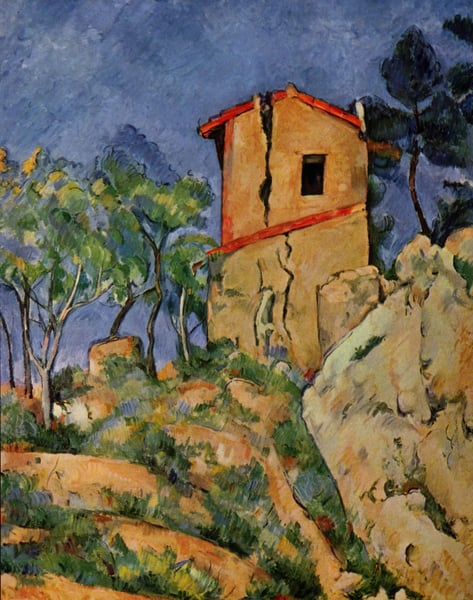
The House with the Cracked Walls
Details
Expert analysis of Paul Cezanne’s The House with the Cracked Walls
Style: Post-Impressionism · Genre: landscape
Expert Analysis: "The House with the Cracked Walls" by Paul Cézanne
Style: Post-Impressionism | Genre: Landscape | Period: Final Period
This work belongs to Cézanne’s final period, a phase widely regarded as the culmination of his artistic evolution. Painted within the Post-Impressionist movement, it exemplifies his departure from naturalistic depiction toward a structural, almost architectural interpretation of nature.
Formal Innovation:
Cézanne reduces the landscape to essential geometric forms—the house’s cubic mass, the tilted plane of the roof, and the fractured wall (the titular “cracked walls”) are rendered with his signature constructive brushstrokes. Parallel hatches of muted ochre, olive, and blue build volume not through linear perspective but through color modulation, where warm and cool tones create spatial tension. The cracked wall itself becomes a motif of temporal decay, yet it is treated with the same painterly weight as the sky or foliage, unifying the composition.
Significance within Post-Impressionism:
Unlike the Impressionists’ fleeting light effects, Cézanne anchors the scene in a permanent, ordered structure. The cracked wall is not mere realism but a symbol of nature’s underlying instability—an idea that would deeply influence Cubism and later modernist abstraction. In his final period, Cézanne pushed toward a synthesis of observation and intellect, where every stroke serves both the immediate visual sensation and the deeper logic of form.
Legacy:
“The House with the Cracked Walls” epitomizes Cézanne’s late style: a melding of materiality and geometry that dissolves the boundary between landscape and still life. Its fractured surface presages the fragmented perspectives of 20th-century art, marking Cézanne as a pivotal bridge between 19th-century tradition and modernism.
Visually similar
20 works with related composition and palette
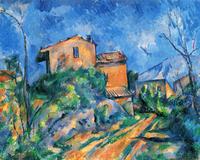
Maison Maria with a View of Chateau Noir
Paul Cezanne
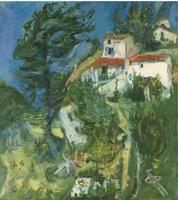
Landscape at Cagnes
Chaim Soutine
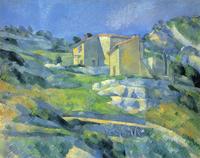
Houses at the L'Estaque
Paul Cezanne
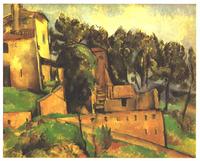
The farm of Bellevue
Paul Cezanne
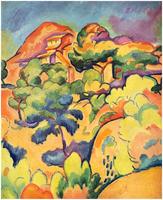
Landscape at La Ciotat
Georges Braque
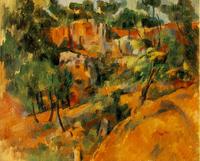
Corner of Quarry
Paul Cezanne
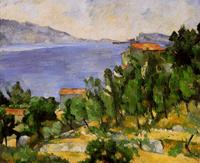
The Bay of L'Estaque from the East
Paul Cezanne
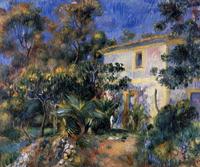
Algiers Landscape
Pierre-Auguste Renoir
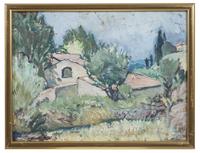
Study from the South of France
Anna Katarina Boberg
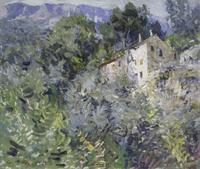
In the south of France
Konstantin Korovin
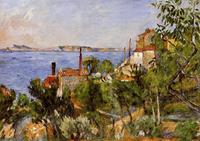
Landscape. Study after Nature
Paul Cezanne
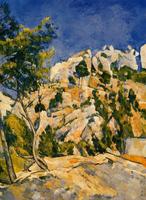
Bottom of the Ravine
Paul Cezanne
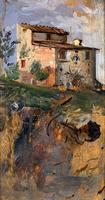
Small house (sketch)
Cristiano Banti
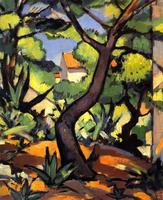
Landscape at Cassis
Samuel Peploe
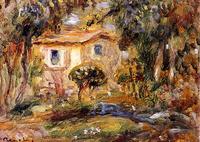
Landscape
Pierre-Auguste Renoir
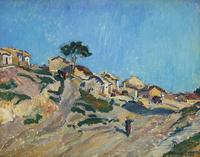
Cartierul tătărăsc la amiază
Jean Alexandru Steriadi
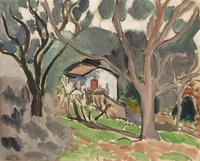
La Maisonnette
Henri Matisse
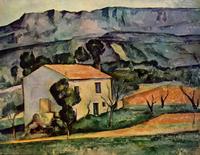
Houses in Provence, near Gardanne
Paul Cezanne
Cypresses
Henri-Edmond Cross
Mas de Galeron
Augustus John