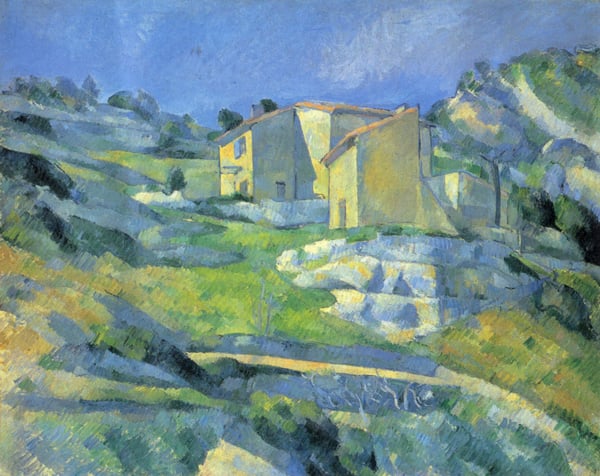
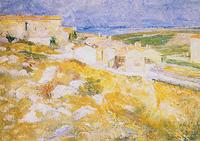
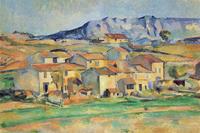
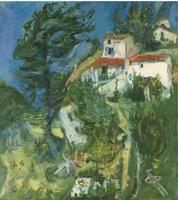
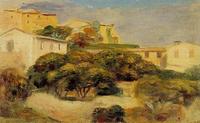
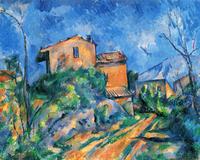
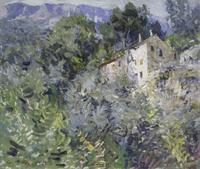
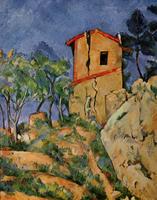
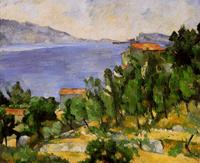
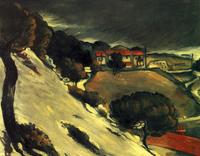
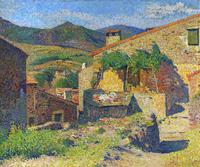
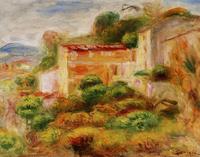
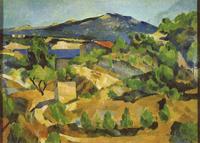
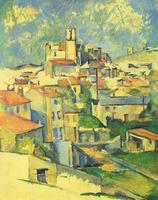
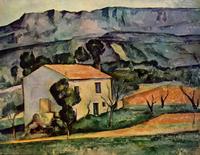
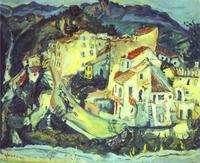
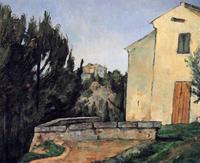
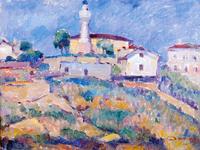
In Paul Cézanne's Houses at the L'Estaque (from his mature period), the artist pushes beyond Impressionist spontaneity toward a structured, analytical vision of nature. Executed in the Post-Impressionist style, the painting depicts the Provençal village with simplified geometric forms—roofs, walls, and trees reduced to cylinders, cubes, and cones. This rigorous ordering of the landscape prefigures Cubism, while the bold, faceted brushwork and earthy palette emphasize the solidity of the scene. The work’s significance lies in its rejection of fleeting atmospheric effects in favor of a timeless, compositional harmony, making it a pivotal bridge between 19th-century Impressionism and 20th-century modernism.