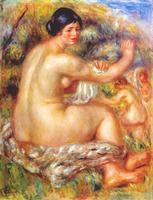
Expert Analysis: Nude Seated on a Sofa by Pierre-Auguste Renoir
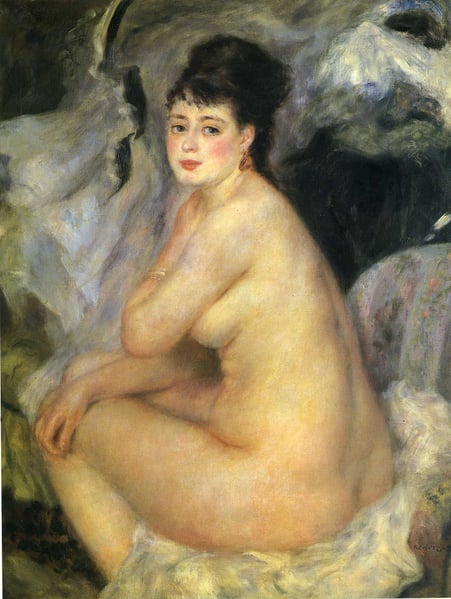
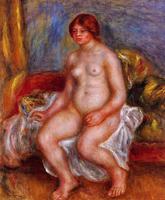
Pierre-Auguste Renoir’s Nude Seated on a Sofa exemplifies the radical shift in painting that defined Impressionism, particularly within the genre of the nude. Rejecting the polished, idealized nudes of academic tradition (such as those by Ingres or Bouguereau), Renoir presents a modern, intimate vision of the female form. The work’s significance lies in its dissolution of hard outlines and sculptural modeling in favor of a technique rooted in broken, shimmering brushstrokes and a high-key, luminous palette.
Renoir bathes the figure in soft, diffused light, allowing the sofa and skin tones to merge in a haze of warm pinks, ochres, and pale blues. This approach captures not a static, monumental nude but a fleeting, lived moment—the sitter appears relaxed, almost candid, in a contemporary interior. The painting underscores the Impressionist commitment to depicting everyday life and the effects of light on color, even in a genre historically reserved for mythological or allegorical themes.
By treating the nude with the same spontaneous brushwork and atmospheric sensitivity as a landscape, Renoir elevates the body into a vehicle for pure painterly sensation. This work is a key example of how Impressionism redefined the nude: no longer a timeless ideal, but a tangible, flesh-and-blood presence caught in the dappled light of the modern world.