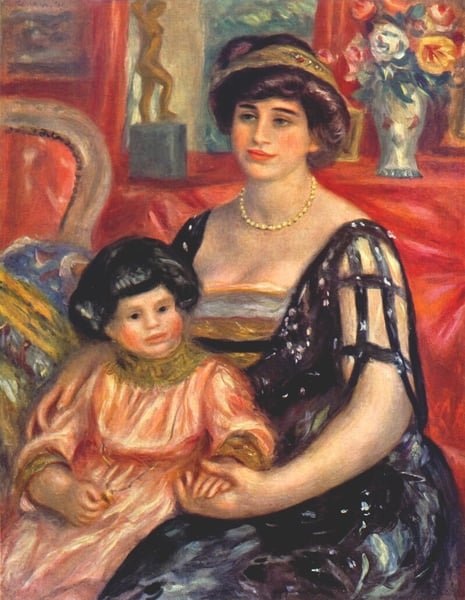
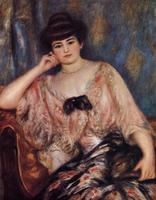
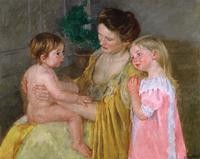
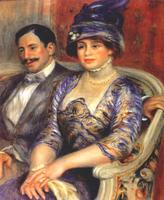
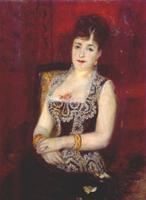
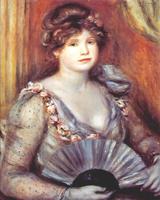
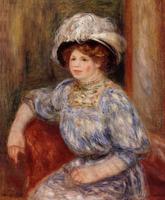
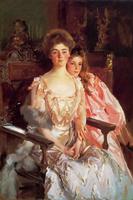
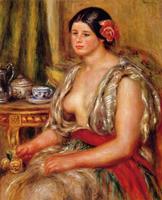
This portrait exemplifies Renoir’s later Impressionist period, where he softened his earlier fractured brushwork in favor of a more classical, volumetric treatment of the human figure. The subject—Madame Duberville with her young son Henri—allowed Renoir to combine his lifelong fascination with light-filled, intimate domestic scenes and his evolving interest in solid, sculptural form.
The painting is significant as a bridge between pure Impressionism and Renoir’s later “Ingresque” phase: the mother’s face and the child’s features are modeled with a gentle, almost porcelain finish, yet the surrounding background and clothing still shimmer with broken, atmospheric color. This balance of tender maternal affection (a hallmark of Renoir’s later work) and painterly virtuosity underscores his enduring focus on human warmth and visual pleasure, even as his style became more disciplined.