
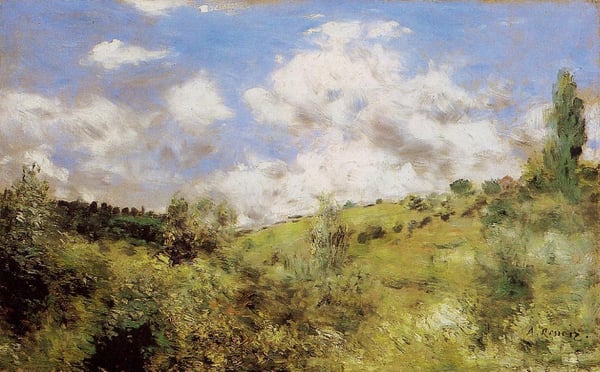
Analisi esperta di Strong Wind (Gust of Wind) di Pierre-Auguste Renoir
Stile: Impressionism · Genere: landscape
Expert Analysis: "Strong Wind (Gust of Wind)" by Pierre-Auguste Renoir
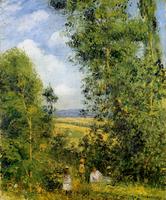
As an Impressionist landscape painted during Renoir’s period of active association with the movement, Strong Wind (Gust of Wind) exemplifies the core Impressionist ambition: capturing a fleeting sensory moment and the effects of atmosphere on perception. Renoir, best known for his figure paintings and depictions of Parisian leisure, here turns his attention to the forces of nature, using the landscape as a vehicle for dynamic energy.
Significance within Impressionism
The artwork’s title itself signals a rupture from static, idealized landscapes. Renoir does not simply record a view; he renders the experience of wind. This is accomplished through his characteristically broken brushwork and a high-key palette. The gust becomes visible through the bending of grasses, the sweep of clouds, and the shimmering, agitated pattern of leaves. Unlike the more structured compositions of Barbizon predecessors, Renoir dissolves firm outlines, allowing color and touch to merge forms with their surroundings.
Technical and Thematic Innovation
The painting is significant for its demonstration of plein air spontaneity. Renoir likely worked rapidly to capture the transitory effect of a sudden breeze, echoing the movement’s obsession with ephemeral light and weather. The brushstrokes are loose and feathery, often applied in complementary colors (such as blues and oranges in the sky) to create visual vibration. This technique does not depict wind iconographically (as in allegorical figures) but sensorily – the viewer feels the rush of air through the rhythm of the strokes.
Renoir’s Unique Contribution
While Monet often dissolved landscapes into pure color and light, Renoir retains a subtle sense of human warmth and tactility, even in a pure landscape. The wind here is not violent but lyrical, almost dance-like, reflecting his enduring interest in softness and fluidity. This work underscores that for Renoir, Impressionism was not solely about optical truth but about capturing the joy and vitality of a passing moment – in this case, the invisible made visible through the trembling of the natural world.
Museum / Gallery
Visivamente simili
20 opere con composizione e palette affini
The Gust of Wind
Pierre-Auguste Renoir
Landscape near Essoyes
Pierre-Auguste Renoir
The House Seen through the Roses
Claude Monet
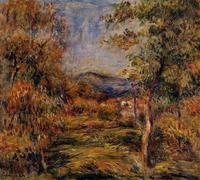
Cagnes Landscape
Pierre-Auguste Renoir
Young corn
Charles-Francois Daubigny
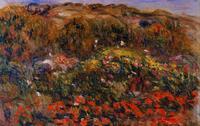
Landscape
Pierre-Auguste Renoir
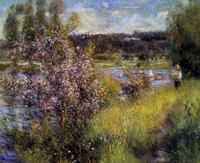
The Seine at Chatou
Pierre-Auguste Renoir
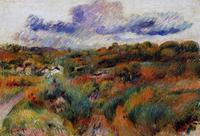
Landscape
Pierre-Auguste Renoir
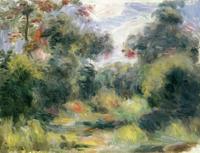
Clearing
Pierre-Auguste Renoir
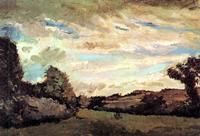
Landscape with Dunes
Vincent van Gogh
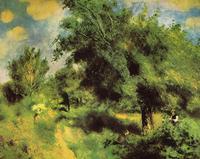
Orchard at Louveciennes the English Pear Tree
Pierre-Auguste Renoir
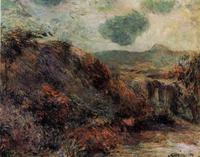
Mountain landscape
Paul Gauguin
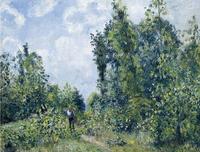
Wanderer near the Wood
Camille Pissarro
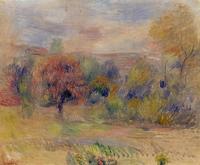
Landscape
Pierre-Auguste Renoir
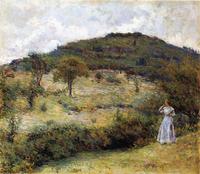
Springtime Stroll
Robert Lewis Reid
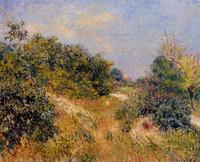
Edge of Fountainbleau Forest June Morning
Alfred Sisley
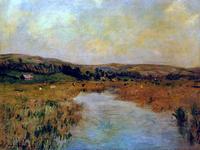
The Valley of the Scie at Pouville
Claude Monet
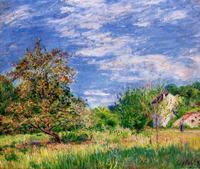
Orchard in Spring
Alfred Sisley
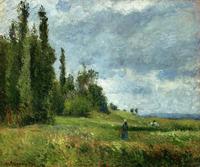
A part of Groettes, Pontoise, Gray Weather
Camille Pissarro
Resting in the woods Pontoise
Camille Pissarro