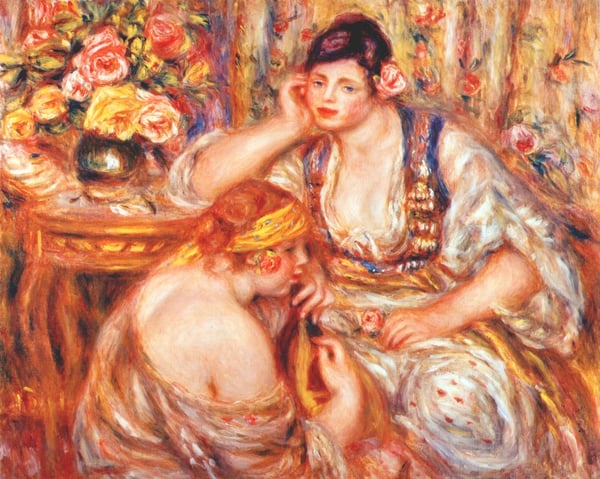
"The Agreement" by Pierre-Auguste Renoir is a significant example of the artist’s later Impressionist period, when his style evolved from the loose, flickering brushwork of the 1870s toward a more structured, classical approach. As a genre painting—a scene of everyday life—the work reflects Renoir’s enduring interest in depicting intimate human interactions with warmth and grace. Painted during his later years, a time marked by physical challenges from arthritis, Renoir’s compositions grew more deliberate, emphasizing solid forms, rich color harmonies, and a sense of tranquil domesticity. This piece encapsulates his shift from pure optical Impressionism to a more decorative, sensuous realism, while still retaining the light-filled palette and gentle atmosphere that define his contribution to the movement. The title itself suggests a moment of social or emotional accord, a theme typical of Renoir’s later work, which often celebrated human connection, harmony, and the pleasures of bourgeois life.