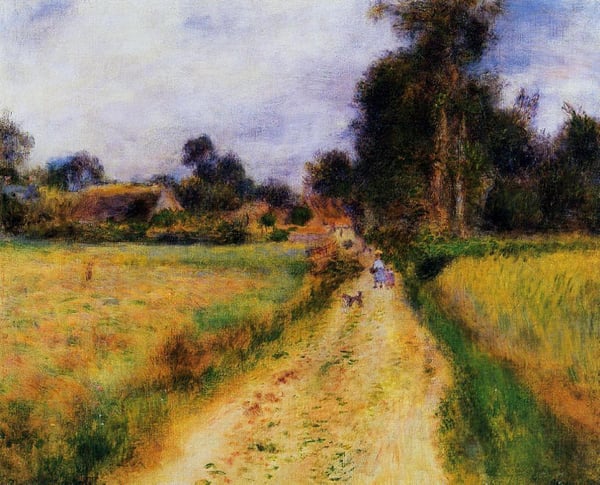
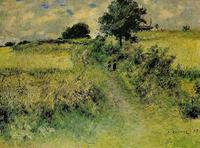
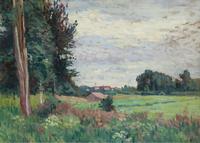
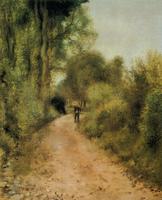
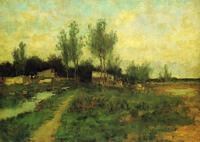
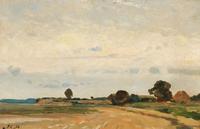
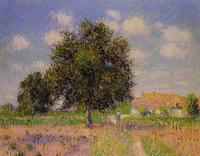
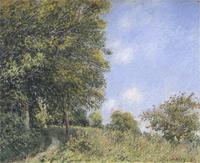
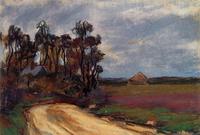
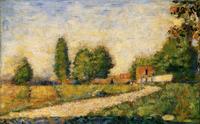
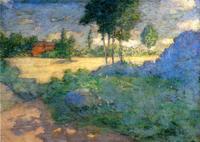
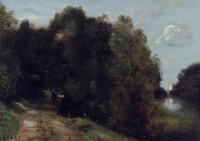
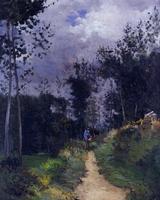
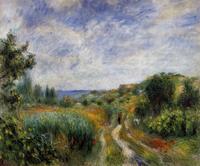
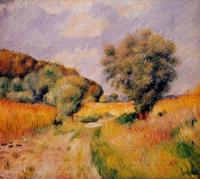
Pierre-Auguste Renoir’s The Farm stands as a quintessential example of Impressionist landscape painting, reflecting the movement’s revolutionary break from academic tradition. Executed during Renoir’s active association with the Impressionist circle, the work prioritizes the fleeting effects of light and atmosphere over precise detail. The composition typically captures a rural scene—likely a farmstead bathed in dappled sunlight—where loose, visible brushstrokes and a vibrant, high-key palette dissolve forms into shimmering patches of color. This technique underscores the Impressionist goal of rendering the transient beauty of everyday life.
What makes The Farm significant is its embodiment of key Impressionist tenets: plein-air directness, a focus on ordinary subject matter, and the perception of color as relative, shaped by surrounding light. Renoir’s warmth and humanist touch often infuse his landscapes with a sense of intimate joy, distinguishing his work from that of contemporaries like Monet or Pissarro. Here, the farm is not a nostalgic ideal but a living, breathing environment—a celebration of nature’s immediacy. The painting’s loose handling and emphasis on optical sensation mark a decisive step away from the finished, moralizing landscapes of the Salon, cementing Renoir’s role in redefining modern painting.