
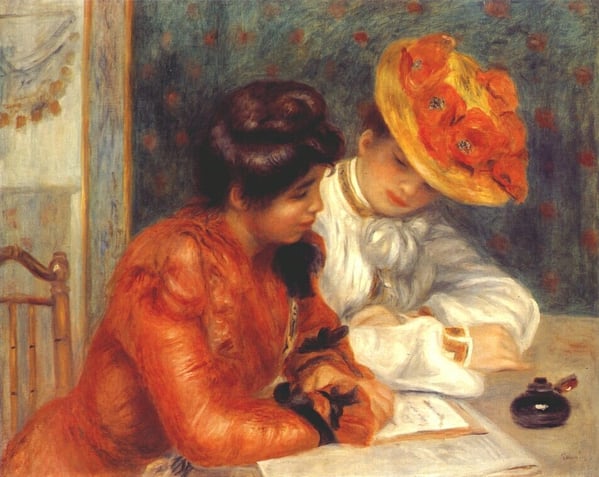
Экспертный разбор работы «The letter» художника Pierre-Auguste Renoir
Стиль: Impressionism · Жанр: genre painting
Expert Analysis of "The Letter" by Pierre-Auguste Renoir
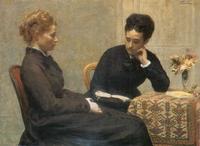
As a work from Renoir's Later Years, "The Letter" exemplifies the artist’s mature Impressionist style while reflecting a shift toward softer, more classical figuration. Painted as a genre scene—a depiction of everyday life—the work captures a quiet, intimate moment: a woman absorbed in reading or writing a letter. This subject matter aligns with Impressionism's focus on modern, domestic, and leisurely activities, yet Renoir’s treatment in this period adds a distinctive warmth and serenity.
Significance within Impressionism and Renoir’s Later Period
-
Evolution of Brushwork and Color – In his later years, Renoir moved away from the looser, more fragmented strokes of early Impressionism toward a smoother, more fluid application of paint. "The Letter" likely displays this transition: the figure's skin and dress are modeled with delicate, blended hues, while the background retains the dappled light and atmospheric softness characteristic of the movement. This synthesis demonstrates Renoir’s ability to refine Impressionist techniques without abandoning their core principles of capturing transient effects.
-
Emphasis on Human Intimacy – Unlike many early Impressionist landscapes or bustling Parisian scenes, "The Letter" focuses on a single, contemplative figure, reflecting Renoir’s growing interest in portraiture and the emotional resonance of private moments. The act of reading or writing a letter becomes a vessel for exploring psychological depth—a theme that critics and viewers often praised in his later work, as it balanced sensory beauty with narrative suggestion.
-
Bridge to Classicism – Renoir’s later period is marked by a return to more solid, sculptural forms, influenced by his study of Renaissance masters such as Raphael. "The Letter" likely exhibits this shift: the woman’s pose may be more deliberate and balanced, her silhouette clearer than in earlier, more spontaneous compositions. This adaptation of classical structure within an Impressionist framework underscores Renoir’s role in expanding the movement’s possibilities, proving that Impressionism could accommodate both fleeting light and timeless grace.
-
Technical Mastery of Light – Even in a calm indoor setting, Renoir treats the scene as an exercise in luminosity. The play of light on the letter, the woman’s face, and surrounding fabric would reveal his enduring commitment to capturing the atmospheric qualities that define Impressionism, but now rendered with a more refined, controlled palette—often dominated by silvery pinks, soft blues, and warm ochres.
Conclusion
"The Letter" is significant as a testament to Renoir’s later artistic synthesis: it retains the freshness and luminosity of Impressionism while introducing a serene, enduring humanism. As a genre painting, it elevates an ordinary domestic act into a study of light, form, and emotion, marking a pivotal moment when Impressionism matured into a vehicle for both sensory pleasure and quiet introspection. This work exemplifies why Renoir’s later years are celebrated for their harmonious blend of modernity and tradition.
Жанр
Стиль
Визуально похожие
20 работ с близкой композицией и палитрой
Plum
Edouard Manet
The End of Lunch
Pierre-Auguste Renoir
Coco and Two Servants
Pierre-Auguste Renoir
At the Cafe
Pierre-Auguste Renoir
Portrait of a Woman in a pink dress
Berthe Morisot
Portrait of an Edwardian Lady
Arthur Hacker
Portrait of a Woman
Pierre-Auguste Renoir
Confidences
Pierre-Auguste Renoir
Portrait of a seated lady
Constant Mayer
Two Girls in Black
Pierre-Auguste Renoir
Study Two Women s Heads
Pierre-Auguste Renoir
Bust of a Girl
Pierre-Auguste Renoir
Portrait of a Lady with a Red Scarf
Paul Émile Chabas
Portrait of Renée Delmas De Pont Jest
Louise Abbéma
The lesson
Pierre-Auguste Renoir
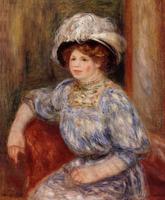
Woman in Blue
Pierre-Auguste Renoir
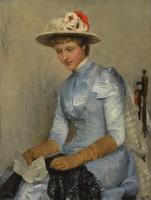
Forget Me Nots
Arthur Hacker
Retrato de Mª Cristina Bordalo Pinheiro
Columbano Bordalo Pinheiro
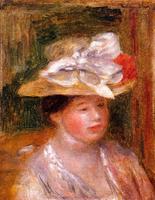
Head of a Woman
Pierre-Auguste Renoir
Reading
Henri Fantin-Latour