
Expert analysis of Pierre-Auguste Renoir’s Two Women with Flowered Hat
Style: Impressionism · Genre: genre painting
Expert Analysis: Two Women with Flowered Hat by Pierre-Auguste Renoir
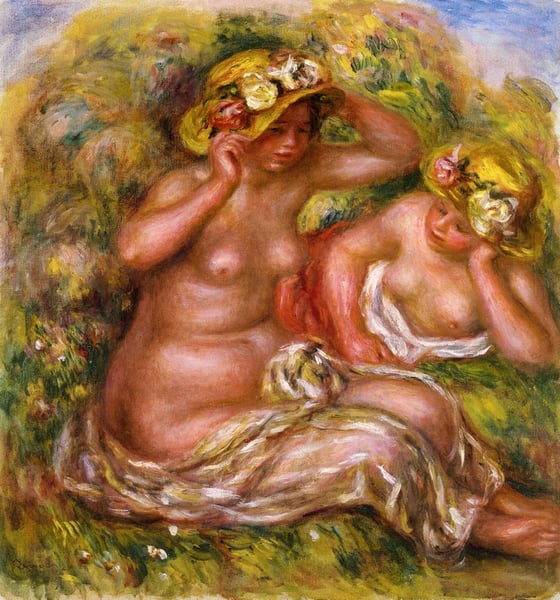
This painting from Renoir’s later years exemplifies a pivotal shift in his artistic vision, moving beyond the pure optical sensations of early Impressionism toward a more sensual, monumental, and classically inspired mode. Though the artist never abandoned his Impressionist roots, his style after about 1885 became increasingly characterized by a softened, almost hazy treatment of form, a warm, satiny palette, and a focus on the idealized beauty of women and children in leisurely settings.
In Two Women with Flowered Hat, the subject—a genre scene of two female figures, one adorned with a prominently flowered hat—is rendered with a luxurious, feathery brushwork that both defines and dissolves form. The hat itself becomes a burst of floral notes, its blossoms echoing the organic vitality of the surrounding space. Renoir’s color harmony here (likely built around pinks, corals, soft blues, and warm greys) creates a unified, glowing atmosphere that is less about capturing a specific moment of light than about evoking a timeless, pleasurable mood.
The painting is significant as a testament to Renoir’s later “pearl-like” period, when he deliberately blurred outlines and compressed space, pushing his figures into a shallow, tapestry-like plane. The flowers on the hat are not just decorative accessories but serve as a visual link between the women and nature—a hallmark of his late work, where human sensuality and natural abundance merge. By focusing on an intimate, unposed interaction between two women, Renoir reaffirms the Impressionist commitment to everyday modernity, yet his handling is anything but ephemeral: the solid, weighty presence of the figures reflects his debt to Venetian Renaissance painting and to the classical tradition of Raphael.
Ultimately, Two Women with Flowered Hat stands as a mature, confident expression of Renoir’s conviction that art should be “amiable, joyous, and beautiful”—a celebration of life’s gentle pleasures rendered with the soft, vibrant touch that defines his later mastery.
Museum / Gallery
Visually similar
20 works with related composition and palette
After the bath
Pierre-Auguste Renoir
A Seating Bather
Pierre-Auguste Renoir
After the bath
Pierre-Auguste Renoir
Bathers
Pierre-Auguste Renoir
The Spring
Pierre-Auguste Renoir
Bather Arranging her Hair
Pierre-Auguste Renoir
Reclining Nude (The Baker's Wife)
Pierre-Auguste Renoir
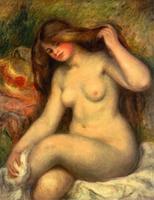
Large Bather with Crossed Legs
Pierre-Auguste Renoir
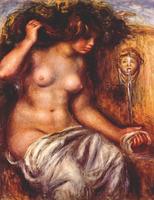
Woman at the fountain
Pierre-Auguste Renoir
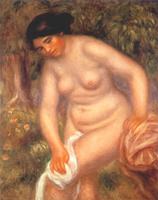
Bather drying herself
Pierre-Auguste Renoir
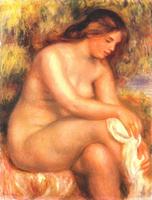
Bather drying her leg
Pierre-Auguste Renoir
Seated bather
Pierre-Auguste Renoir
Woman sleeping
Pierre-Auguste Renoir
Women bathing
Pierre-Auguste Renoir
Bather with Long Hair
Pierre-Auguste Renoir
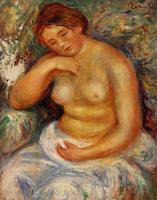
Seated Nude with a Bouquet
Pierre-Auguste Renoir
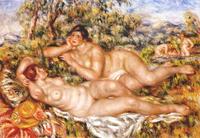
The Great Bathers (The Nymphs)
Pierre-Auguste Renoir
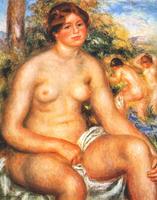
Seated Bather
Pierre-Auguste Renoir
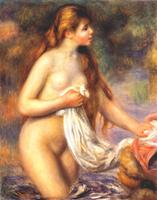
Bather
Pierre-Auguste Renoir
Sleeping woman
Pierre-Auguste Renoir