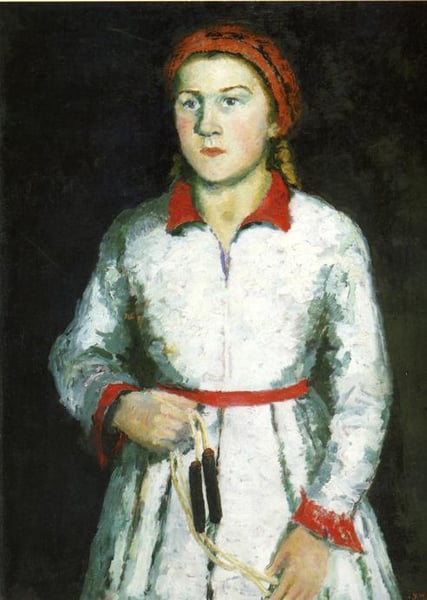
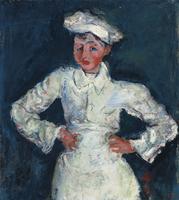
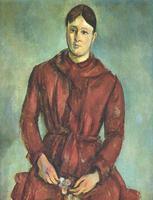
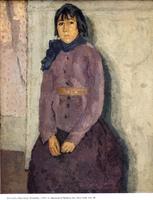
This work by Kazimir Malevich, executed in a Post-Impressionist style, holds significance as a rare representational portrait from an artist who would later pioneer radical abstraction.
Within the Post-Impressionist tradition, Malevich’s handling of the portrait genre emphasizes emotional expression and simplified form over strict naturalism. The painting likely employs bold, non-naturalistic color and a flattened pictorial space—hallmarks of the style—to convey not only a likeness but a subjective, intimate connection to the sitter (the artist’s daughter).
Its importance lies in documenting Malevich’s early mastery of European modernist trends before his decisive turn to Suprematism. As a Pre-Suprematist work, it demonstrates that his later geometric non-objectivity grew out of a deep engagement with the human figure and the expressive possibilities of paint, making this portrait a key transitional piece within his oeuvre.