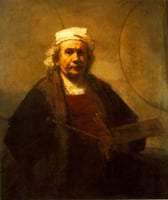
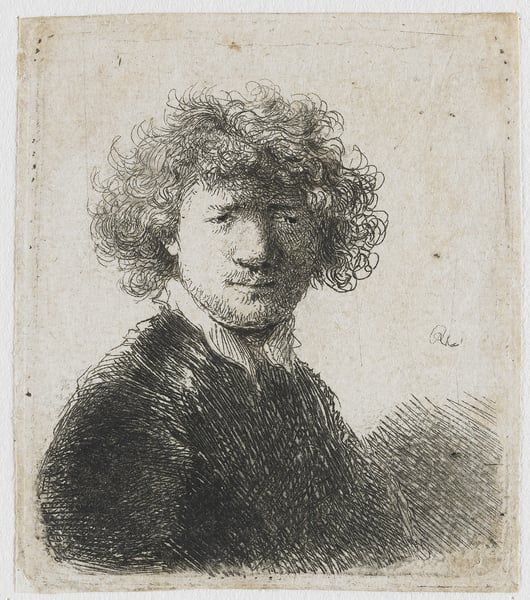
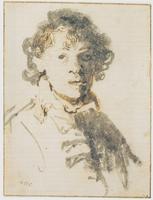
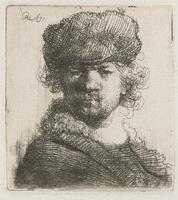
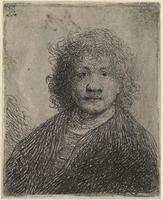
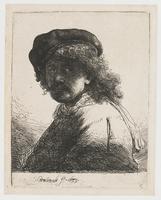
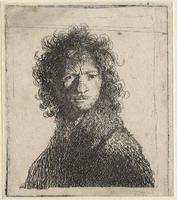
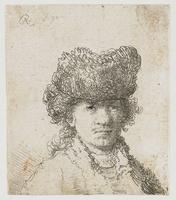
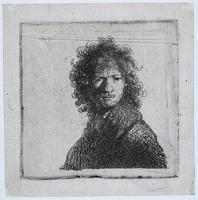
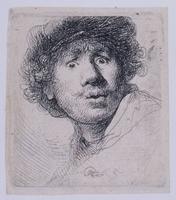
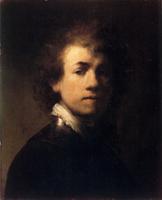
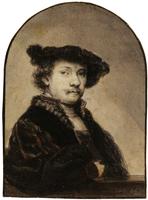
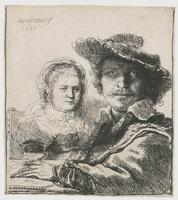
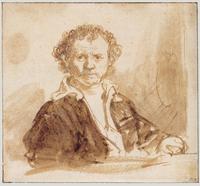
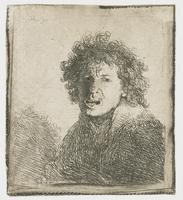
This work, a tronie by Rembrandt, exemplifies the Baroque fascination with psychological depth and dramatic chiaroscuro, even within a seemingly simple bust portrait. The description—"head bowed forward, left shoulder unshaded"—immediately signals Rembrandt’s radical manipulation of light. By leaving that shoulder in full illumination while the face is cast in shadow by the bowed posture, he creates a tense asymmetry: the viewer’s eye is drawn to the incongruous brightness on the left, forcing a contemplative engagement with the old man’s hidden expression. The flowing beard and hunched pose evoke not just old age, but a state of introspection or humility, typical of Baroque subjects that aim to stir empathy. As a tronie, it is less a specific likeness than a study of character and temporality, and Rembrandt’s treatment—using thick, expressive brushwork to model the beard and skin, while leaving the shoulder starkly unmodelled—demonstrates his revolutionary approach to paint as a conveyor of both texture and emotion. The work’s significance lies in how it compresses the grand Baroque drama of light and shadow into a bust-length frame, transforming a simple study into a profound meditation on human fragility.