
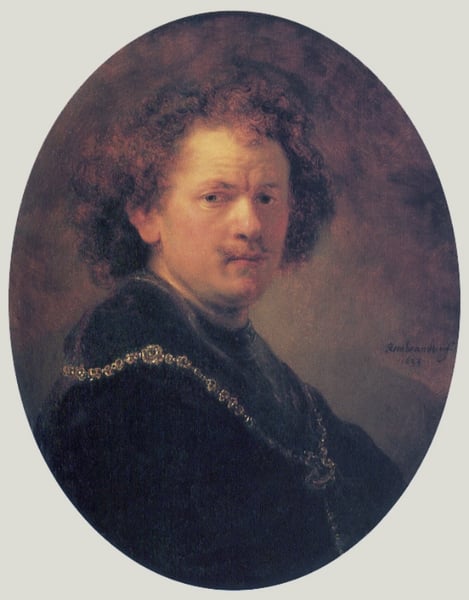
Expert analysis of Rembrandt’s Self-portrait
Style: Baroque · Genre: self-portrait
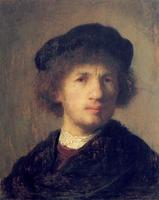
This self-portrait by Rembrandt exemplifies the Baroque period’s emphasis on intense realism, dramatic chiaroscuro, and psychological depth. As a self-portrait, it is significant for its unflinching introspection—Rembrandt uses the genre not merely to record his appearance but to probe the human condition. The Baroque style’s characteristic play of light and shadow here directs attention to the face, isolating the sitter’s expression from a dark background, which heightens the sense of intimate contemplation. Within the Baroque tradition, such self-portraits mark a departure from idealized or allegorical representation toward a raw, individualistic honesty. Rembrandt’s treatment of texture—the rough brushwork suggesting flesh and fabric—further underscores the Baroque fascination with tangible reality. This work stands as a milestone in the self-portrait genre, demonstrating how the Baroque aesthetic could transform personal likeness into a universal meditation on mortality, identity, and the artist’s own role in capturing truth.
Museum / Gallery
Genre
Style
Visually similar
20 works with related composition and palette
Self-portrait Bareheaded
Rembrandt
Self-portrait
Rembrandt
Self-portrait with Hat and Gold Chain
Rembrandt
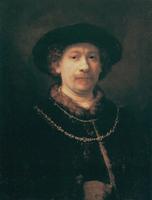
Self-portrait
Rembrandt
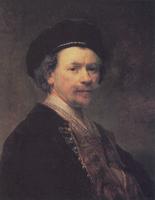
Self-portrait
Rembrandt
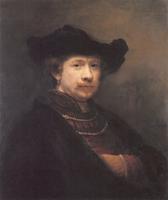
Self-portrait
Rembrandt
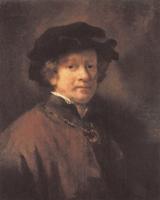
Self-portrait
Rembrandt
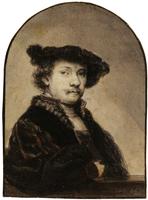
Rembrandt van Rijn
Ferdinand Bol
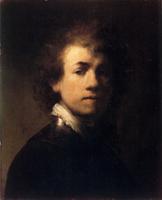
Self-Portrait in a Gorget
Rembrandt
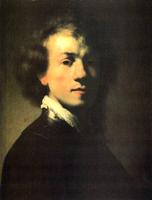
Self-portrait
Rembrandt
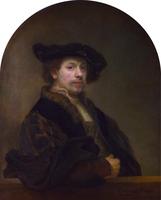
Self-portrait at the Age of 34
Rembrandt
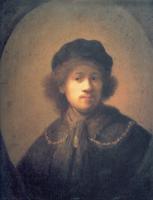
Self-portrait with Beret and Gold Chain
Rembrandt
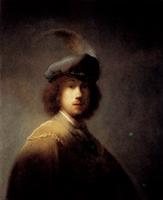
Self-Portrait in a Plumed Hat
Rembrandt
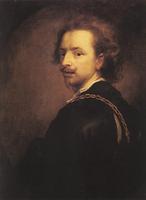
Self-portrait
Anthony van Dyck
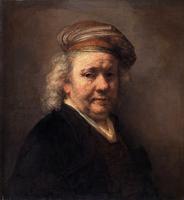
Self-portrait
Rembrandt
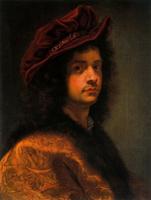
Autorretrato Corredor De Vasari
Giovanni Battista Gaulli
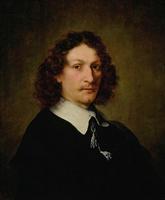
Portrait of a Man
Ferdinand Bol
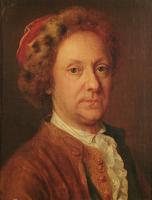
Self-portrait
Jean-Baptiste Oudry
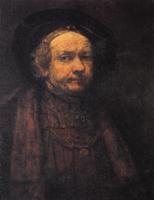
Self-portrait
Rembrandt
Self-portrait
Rembrandt