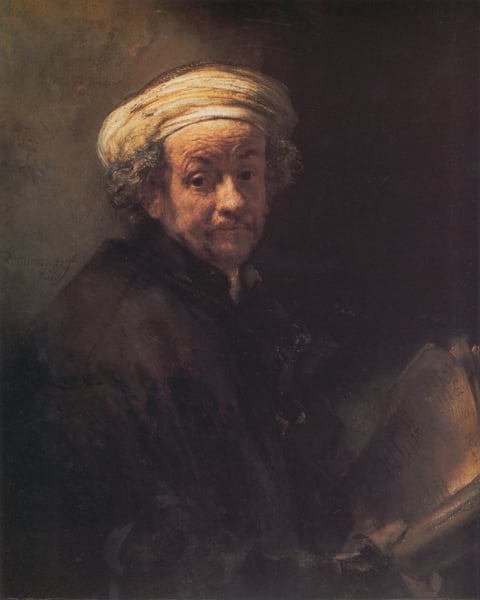
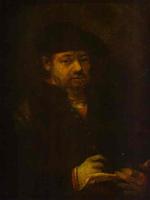
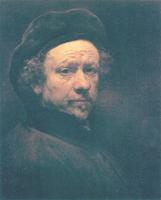
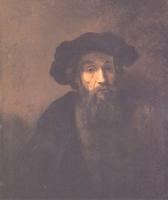
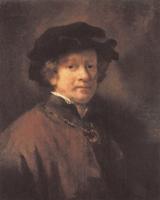
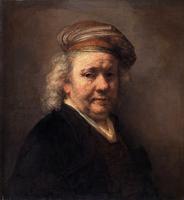
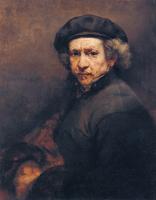
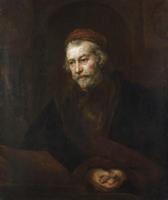
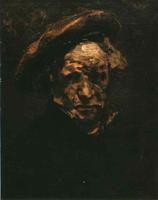
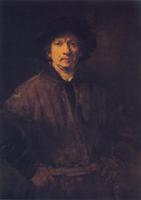
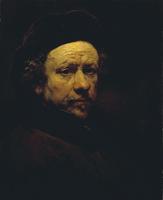
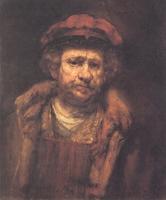
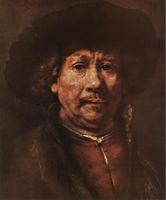
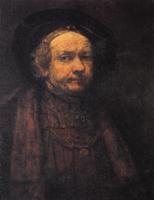
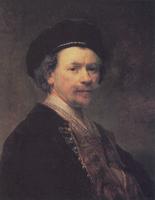
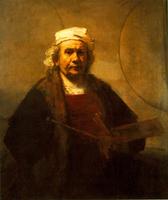
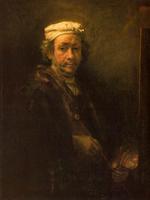
Rembrandt’s Self-portrait as the Apostle Paul is a striking fusion of Baroque drama and Tenebrist lighting, rendered within the intimate genre of self-portraiture. Its significance lies in how it transforms the conventional self-portrait into a vehicle for spiritual and psychological introspection, a hallmark of Baroque art. The use of Tenebrism—sharp contrasts between deep shadow and bright light—focuses the viewer’s attention on the artist’s face and the subtle attributes (such as the apostle’s attribute, here unspecified but implied by the title) that signal his assumed identity. By casting himself as Saint Paul, Rembrandt elevates the genre from mere likeness to a meditation on faith, mortality, and artistic persona. This approach epitomizes the Baroque interest in immediacy, emotion, and the interplay of light and darkness to reveal inner character, while Tenebrism heightens the dramatic tension, making the work a powerful example of how self-portraiture could engage with larger religious and existential themes of its period.