
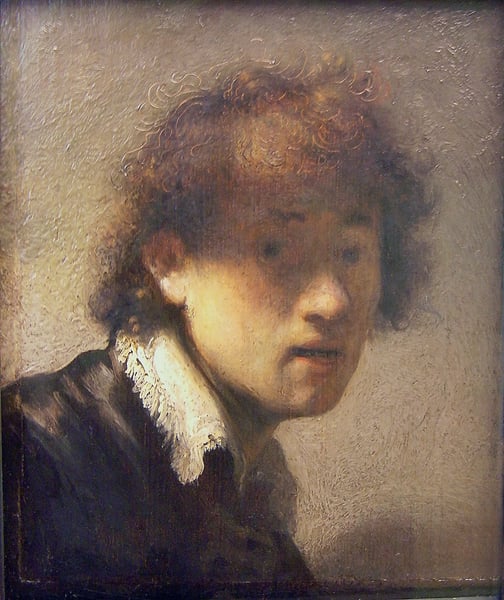
Rembrandt の Self-portrait at an early age の専門的な分析
スタイル:Baroque · ジャンル:self-portrait, tronie
Expert Analysis: Self-portrait at an Early Age by Rembrandt van Rijn
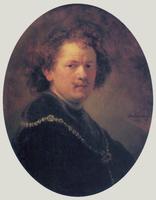
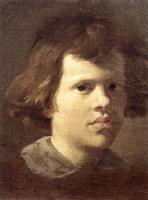
Rembrandt’s Self-portrait at an Early Age (circa 1628) stands as a pivotal work within the Baroque tradition, blending the conventions of a self-portrait with the experimental genre of the tronie—a study of exaggerated facial expression or character type. Painted when the artist was barely in his early twenties, this piece already reveals the profound psychological insight and technical daring that would define his mature œuvre.
Significance within Baroque Style
The painting exemplifies the Baroque fascination with chiaroscuro and dramatic lighting. Rembrandt casts his own face in deep shadow, with only a sliver of light catching the cheek, nose, and the whites of the eyes. This stark contrast—hallmarks of the clair-obscur technique—creates an almost theatrical intimacy, drawing the viewer into the artist’s searching gaze. Unlike the polished, idealized self-images of earlier Renaissance masters, Rembrandt’s approach is raw, unflinching, and deeply human.
Genre Innovation: Self-Portrait as Tronie
What makes this work especially significant is its intersection of self-portraiture with the tronie tradition. Rather than a straightforward likeness, Rembrandt experiments with expression, tilting his head and slightly opening his mouth to capture a fleeting moment of curiosity or surprise. This was not a mere vanity piece; it was a workshop exercise in capturing emotion, akin to the expressive heads of Frans Hals or the Caravaggisti. By turning his own face into a subject of study, Rembrandt effectively democratized the tronie, proving that the artist’s own visage could serve as a universal vehicle for human feeling.
Early Mastery and Legacy
Executed with swift, confident brushwork—note the rapid strokes defining the hair and collar—the painting demonstrates Rembrandt’s early command of paint as both substance and illusion. The deliberate lack of background detail forces total focus on the face, a strategy he would later refine in masterpieces like The Jewish Bride.
This self-portrait is not merely a youthful exercise; it is a manifesto. It announces Rembrandt’s lifelong obsession with identity, mortality, and the infinite nuances of expression. In the context of Baroque art, where drama and emotion reigned, Rembrandt’s decision to place his own likeness under such microscopic scrutiny elevated self-portraiture from a simple record to a profound philosophical inquiry. It remains a cornerstone of his legacy—the first of many conversations with himself that would redefine the genre for centuries.
Museum / Gallery
視覚的に類似
構図やパレットが近い作品 20 件
Self-portrait as a Young Man
Rembrandt
Self-portrait
Rembrandt
Self-Portrait in a Gorget
Rembrandt
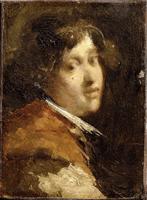
Male portrait
Giacomo Favretto
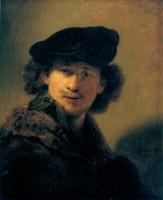
Self-portrait with beret
Rembrandt
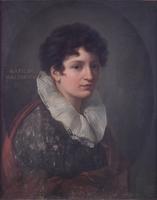
Matilde Malenchini, Italian artist
Vincenzo Camuccini
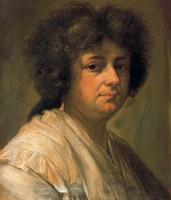
Portrait of Sebastiana Merclein, his wife
Francisco Bayeu y Subias
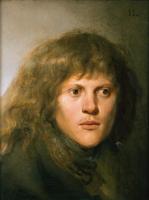
Self Portrait
Jan Lievens
Thomas Otway
John Riley
Self Portrait
Carel Fabritius
Portrait De Hendryck Henck Et De Sa Femme Catharina Browers
David Bailly
Self-portrait
Rembrandt
Charles Kemble
Thomas Lawrence
Portrait of a Young Man
John Jackson
A Portrait Of A Young Man
Théodore Géricault
The artist's wife Rita
Amedeo Bocchi
Boys Cup
Rembrandt
Self Portrait
Francisco Goya
Self-portrait with Beret and Gold Chain
Rembrandt
Portrait of a Boy
Gian Lorenzo Bernini