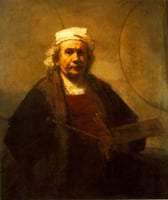
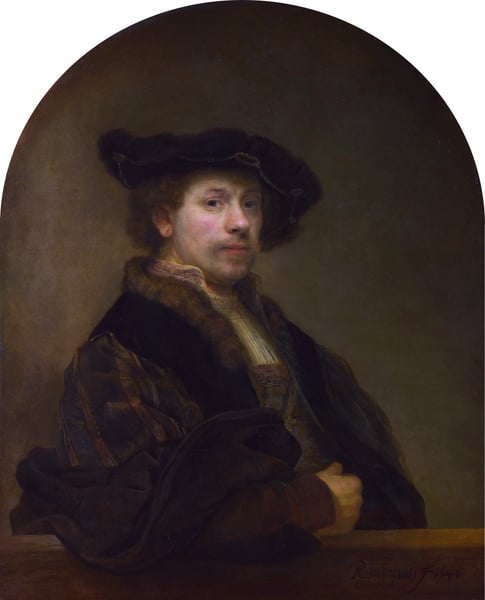
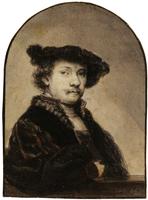
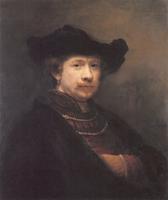
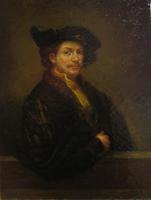
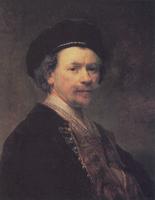
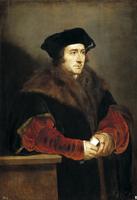
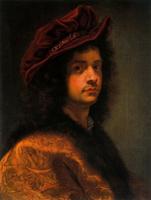
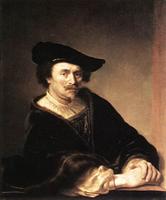
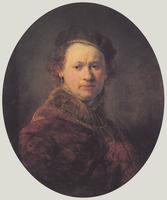
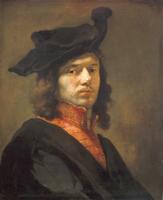
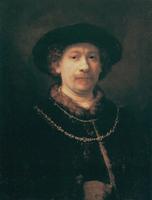
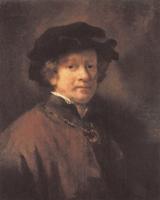
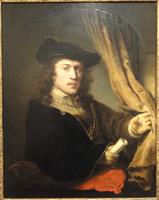
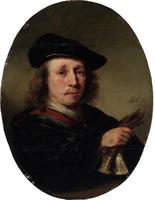
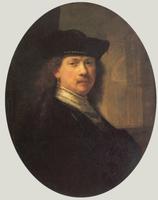
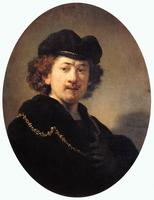
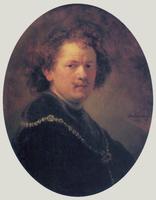
This self-portrait by Rembrandt, executed when the artist was 34, stands as a quintessential example of Baroque portraiture’s emphasis on psychological depth and dramatic realism. Within the Baroque style, Rembrandt’s work is significant for its masterful use of chiaroscuro—the stark contrast between light and shadow—which here directs the viewer’s focus to the sitter’s face and eyes, conveying a sense of introspection and self-assuredness. As a portrait, this piece transcends mere likeness; it is a profound exploration of identity, capturing the artist at a mature stage of his career, confident in his craft but unflinching in his self-examination. The visible brushwork and textured application of paint are characteristic of Rembrandt’s later technique, lending the work a palpable vitality. In the broader context of the Baroque period, this self-portrait is significant because it embodies the era’s shift toward heightened emotional expression and individualized human experience, while also serving as a personal document of an artist who revolutionized the genre of self-portraiture.