Expertenanalyse zu Rembrandts The Elevation Of The Cross
Stil: Baroque, Tenebrism · Genre: religious painting
This analysis is grounded solely in the provided facts: Baroque style, Tenebrism technique, and religious painting genre.
Artwork: The Elevation of the Cross (c. 1633) by Rembrandt van Rijn
Analysis:
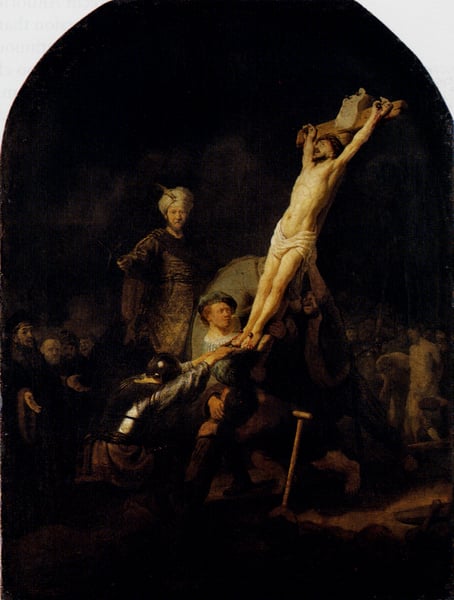
Rembrandt's The Elevation of the Cross is a masterpiece of Baroque religious painting, significant for its revolutionary use of Tenebrism to transform a familiar biblical scene into an intimate, psychologically charged drama. While Tenebrism—a stark, high-contrast style of chiaroscuro—was pioneered by Caravaggio, Rembrandt reimagines it here not merely for theatrical effect, but to extract profound emotional and spiritual meaning.
The composition is a vortex of physical struggle and divine light. In the darkened, chaotic foreground, straining figures heave the cross upward. Rembrandt’s Tenebrist technique isolates these figures: deep, velvety shadows swallow the edges of the canvas, while a single, poignant shaft of light falls directly on the body of Christ. This is the painting’s core significance. Whereas earlier Baroque artists often used tenebrism to create a sense of awe or supernatural power, Rembrandt uses it to humanize the Passion. The light does not glorify a triumphant savior; it reveals a man of flesh and blood, his body bathed in a pale, almost sickly glow. The darkness surrounding him is not merely atmospheric—it symbolizes the ignorance, brutality, and spiritual blindness of the crowd, a hallmark of Rembrandt’s psychological depth.
Furthermore, as a Baroque work, the painting is dynamic. It captures a single, suspended moment of maximum tension—the instant of physical hoisting before the cross settles into its final, vertical position. The diagonal thrust of the cross, the twisted postures of the workers, and the sweeping brushstrokes (visible in the clothing and sky) create a restless, kinetic energy characteristic of Baroque drama. Yet Rembrandt's genius lies in balancing this movement with stillness: Christ’s face remains calm, a quiet center in the storm.
As a religious painting, its significance lies in its departure from idealized, distant depictions of the Crucifixion. Rembrandt thrusts the viewer into the physical and emotional grit of the event. We are not spectators but participants, standing among the executioners in the murky half-light. The Tenebrism serves a theological purpose: the light that pierces the darkness is both a literal illumination and a metaphor for faith—a glimmer of divinity amid human suffering. This combination of Baroque exuberance, Tenebrist chiaroscuro, and raw human empathy establishes the work as a pivotal moment in Western art, where religious narrative becomes personal, visceral, and timeless.
Museum / Gallery
Visuell ähnlich
20 Werke mit ähnlicher Komposition und Farbpalette
Crucifixion
Guercino
Christ on the Cross
Peter Paul Rubens
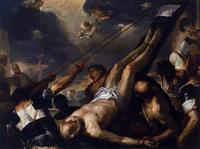
Crucifixion of Saint Peter
Luca Giordano
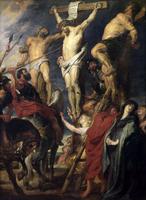
Christ on the Cross Between the Two Thieves
Peter Paul Rubens
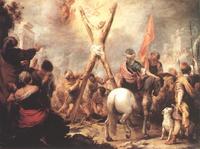
The Martyrdom of St. Andrew
Bartolome Esteban Murillo
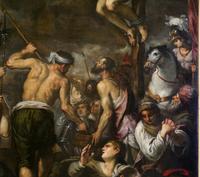
Crucifixion (detail)
Palma il Giovane
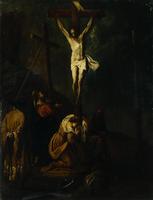
Crucifixion
Leonaert Bramer
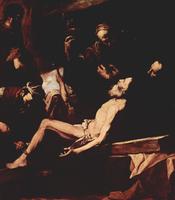
The Martyrdom of St. Andrew
Jusepe de Ribera
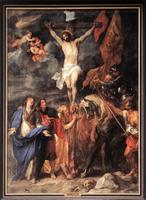
Golgotha
Anthony van Dyck
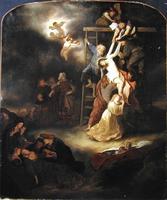
The Descent from the Cross
Salomon Koninck
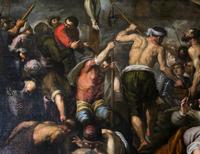
Crucifixion (detail)
Palma il Giovane
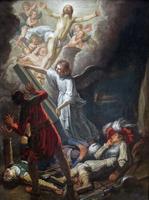
The Resurrection of Christ
Pieter Lastman
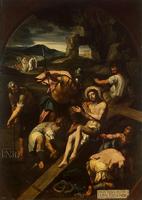
Preparativos Para La Crucifixión
Francesco Ribalta
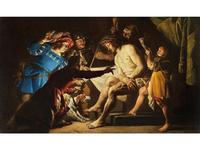
THE MOCKERY OF CHRIST
Matthias Stom
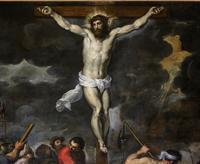
Crucifixion (detail)
Palma il Giovane
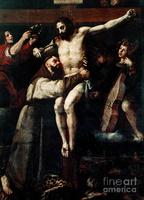
Saint Francis of Assisi Embracing the Crucified Christ
Francesco Ribalta
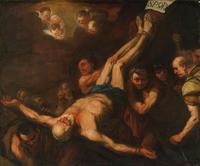
Crucifixion of St Peter
Luca Giordano
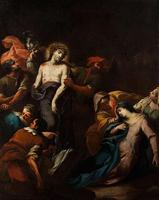
ECCE HOMO
Nicola Bertucci
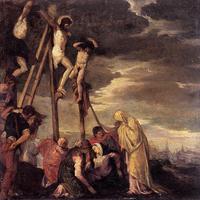
Calvary (after Veronese)
Berthe Morisot
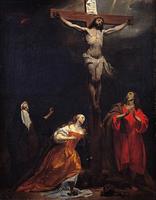
Crucifixion
Gabriel Metsu