
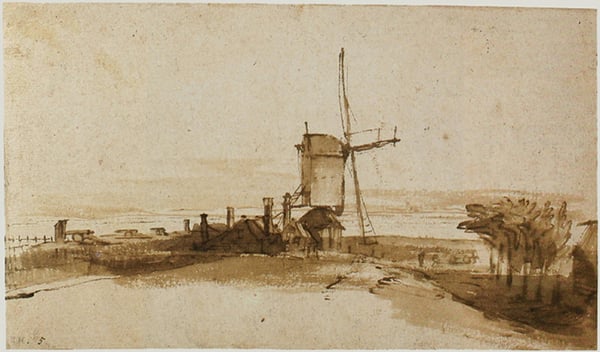
Analisi esperta di The Mill on the Het Blauwhoofd di Rembrandt
Stile: Baroque · Genere: landscape
The significance of Rembrandt's "The Mill on the Het Blauwhoofd" lies in how it transforms a straightforward landscape into a characteristically Baroque meditation on light, atmosphere, and human presence. As a landscape by an artist primarily renowned for portraiture and history painting, it demonstrates Rembrandt's ability to infuse a seemingly mundane rural scene—a windmill on the Amsterdam waterfront—with dramatic chiaroscuro and a sense of fleeting time. The composition balances the monumental silhouette of the mill against a vast, changing sky, a hallmark of Baroque naturalism that emphasizes both the power of nature and the quiet dignity of everyday labor. This work is significant because it elevates the landscape genre beyond topography, using Rembrandt's signature tenebrism and broken brushwork to create a moody, intimate glimpse of the Dutch countryside that feels both specific and universal.
Visivamente simili
20 opere con composizione e palette affini
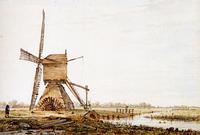
Landscape with watermill
Jacob van Strij
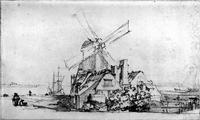
The bastion in Amsterdam
Rembrandt
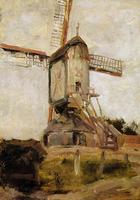
Mill of Heeswijk Sun
Piet Mondrian
Windmills, Blackheath
Edward William Cooke
The Mill at Kelf
Theo van Rysselberghe
Gardens on Montmartre and the Blute-Fin Windmill
Vincent van Gogh
Landscape with mill and cattle
Jacob van Strij
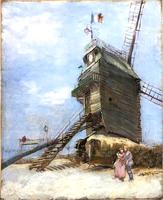
Le Moulin de la Galette 4
Vincent van Gogh
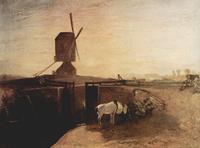
The big connection channel at Southall Mill
J.M.W. Turner
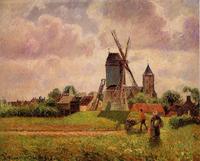
The Knocke Windmill, Belgium
Camille Pissarro
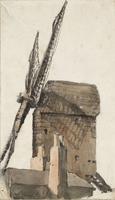
Windmill
David Cox
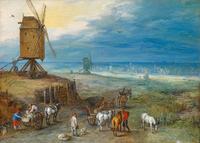
Rest by a Windmill
Jan Brueghel the Elder
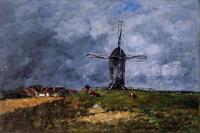
Cayeux, Windmill in the Countryside, Morning
Eugene Boudin
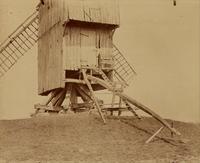
Moulin (Somme)
Eugène Atget
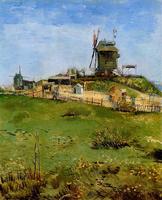
Le Moulin de la Gallette
Vincent van Gogh
St Aubin's Bay, Jersey
James Webb
Landscape with a mill
Johan Hendrik Weissenbruch
Landscape at Noorden
Johan Hendrik Weissenbruch

Eenden in de sloot bij een molen rechtsonder get
Louwrens Hanedoes
A Windmill near Norwich
John Crome