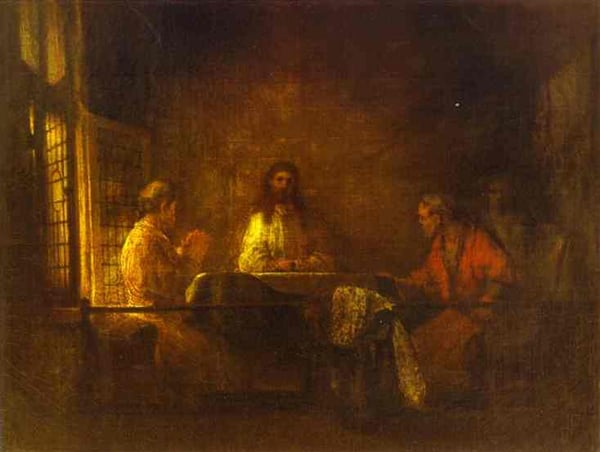
Analyse experte de The Pilgrims at Emmaus de Rembrandt
Style : Baroque, Tenebrism · Genre : religious painting
Expert Analysis: "The Pilgrims at Emmaus" by Rembrandt
Rembrandt’s The Pilgrims at Emmaus is a masterwork of the Baroque period, distinguished by its radical use of tenebrism—a dramatic, high-contrast chiaroscuro that plunges most of the scene into deep shadow while illuminating key figures with a stark, almost supernatural light. Painted within the tradition of religious narrative, this work reimagines the biblical story of Christ’s post-Resurrection appearance to two disciples (Luke 24:13–35) with a psychological intensity that marks a turning point in Baroque art.
Significance within Tenebrism and Baroque Style
Unlike the more theatrical tenebrism of Caravaggio, Rembrandt’s light sources are softer and more diffuse, yet equally deliberate. Here, the radiant glow emanates from Christ at the center, casting an unearthly halo that reveals the disciples’ sudden recognition—the very moment of revelation. The extreme contrast between the illuminated figures and the near-black background focuses the viewer’s attention on the intimate, transformative event. This technique not only heightens the drama but also spiritualizes the scene: light becomes a metaphor for divine presence and insight.
Genre Innovation
As a religious painting, The Pilgrims at Emmaus deviates from typical Baroque altar pieces by eschewing grandiosity for quiet humanism. The disciples are shown as ordinary, weary travelers, their faces etched with surprise and awe. Rembrandt’s tenebrist handling of light and shadow does not merely serve decorative effect but reveals inner emotional states—the shock of recognition, the dawning of faith. This psychological depth, combined with the stark realism of the figures (their wrinkled clothes, humble table, and simple meal), grounds the sacred story in tangible human experience.
Baroque Context
Baroque art often aimed to engage the viewer’s emotions and devotion. Rembrandt achieves this through a controlled, intimate composition rather than sweeping movement or bombast. The tenebrist spotlighting makes the painting feel like a private moment caught in time—a spiritual encounter that invites the beholder to share in the disciples’ astonishment. In this, The Pilgrims at Emmaus exemplifies Baroque religious art at its most contemplative, proving that profound faith can be conveyed through economy of gesture and masterful control of light.
Museum / Gallery
Genre
Visuellement similaire
20 œuvres à la composition et à la palette proches
Supper at Emmaus (after Rembrandt Van Rijn)
Thomas Stuart Smith
The Supper at Emmaus
Rembrandt
The Disciples at Emmaus
Eugene Delacroix
Philemon and Baucis
Rembrandt
Tobias's Farewell to his Parents
Samuel Dirksz van Hoogstraten
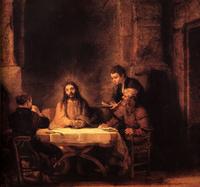
The Supper at Emmaus
Rembrandt
Pashur Smiting Jeremiah in the Temple
Leonaert Bramer
Ahasuerus (Xerxes), Haman and Esther
Rembrandt
Tsar Boris and the Queen Martha
Nikolai Ge
The Cotter's Saturday Night
David Wilkie
Children Reading
Eastman Johnson
Parable of the Laborers in the Vineyard
Rembrandt
Unwanted Advances
Isidoro Grünhut
The Supper at Emmaus
Jacob Jordaens
Bunyan in Prison
George Folingsby
The Prodigal Son Receives His Rightful Inheritance
Bartolome Esteban Murillo
Last Supper
Nikolai Ge
Wishart's Last Exhortation
William Quileer Orchardson
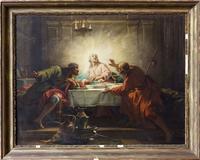
The Pilgrims of Emmaus
Jean II Restout
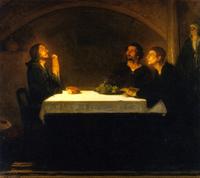
The Pilgrims of Emmaus
Henry Ossawa Tanner