Analisi esperta di Titus Reading di Rembrandt
Stile: Baroque · Genere: portrait, tronie
Expert Analysis: "Titus Reading" by Rembrandt
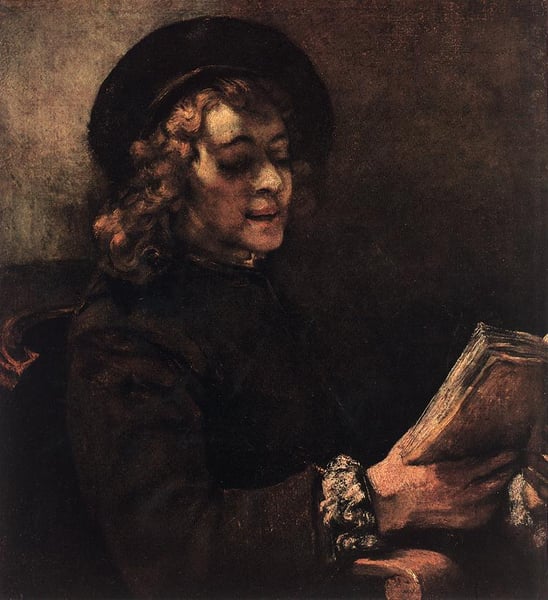
Rembrandt’s Titus Reading (circa 1655) stands as a masterful example of the Baroque portrait, specifically the Dutch tronie genre—a type of character study that focuses not on a formal likeness but on an expressive, often idealized face or mood. The painting is significant for its intimate, psychologically penetrating treatment of its subject, the artist’s beloved son Titus, and for its virtuoso manipulation of light and shadow that defines Rembrandt’s mature Baroque style.
Baroque Drama and Chiaroscuro In keeping with Baroque principles of theatricality and emotional immediacy, Rembrandt employs a stark, concentrated chiaroscuro. A warm, golden light falls from the upper left, illuminating Titus’s brow, cheek, and the open book before him, while plunging the background and much of his figure into deep, velvety shadow. This selective illumination not only creates a profound sense of volume and three-dimensionality but also focuses the viewer’s attention entirely on the act of reading—a quiet, introspective moment rendered with dramatic intensity. The contrast between light and dark becomes a metaphor for the absorption of knowledge, while the soft, almost smoky transitions (a hallmark of Rembrandt’s late technique) lend the scene an atmospheric, almost spiritual quality.
The Tronie Tradition and Personal Portraiture As a tronie, the work is less a conventional portrait of a specific individual than a study of a type or expression—in this case, a young man lost in thought. However, Rembrandt transforms the genre by layering it with profound personal emotion. By using his own son as model, he infuses the character study with a tenderness and familiarity absent from typical anonymous tronies. Titus’s downcast eyes, slightly parted lips, and relaxed posture convey a natural, unselfconscious engagement with his reading. The lack of elaborate costume or grand setting—Titus wears a simple beret and a dark robe—reinforces the quiet, humble humanism that distinguishes Rembrandt’s best works from the more ostentatious portraiture of his contemporaries.
Significance within the Baroque Period Titus Reading exemplifies the shift in Baroque art from the extroverted, courtly drama of the early 17th century toward an introspective, psychological realism. Rembrandt’s ability to capture a fleeting moment of private reflection—the soft glow on the page, the slight deflection of light from Titus’s eyes—demonstrates a Baroque sensitivity to the transient effects of light and human emotion. The painting also showcases Rembrandt’s increasingly bold, loose brushwork, particularly in the rendering of the book and the boy’s features, where strokes of paint remain visible, adding texture and energy. This technical freedom, combined with the deeply human subject, marks Titus Reading as a pivotal work that bridges the Baroque fascination with grandeur and the Dutch Golden Age’s celebration of everyday life, memory, and the quiet power of the mind.
Museum / Gallery
Visivamente simili
20 opere con composizione e palette affini
Self-portrait as the Apostle Paul
Rembrandt
Self-portrait
Rembrandt
Portrait of a Boy
Adriaen van Ostade
Lesender Knabe
Frans Hals
Self-portrait
Rembrandt
Self-portrait with beret
Rembrandt
Self-portrait with a Sketch Book
Rembrandt
Self-portrait
Rembrandt
The Reading Lesson
Gerard Terborch
Portrait Of A Seated Man Holding A Hat
Frans Hals
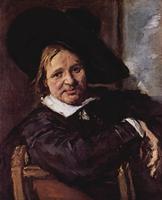
The Man with the Slouch Hat
Frans Hals
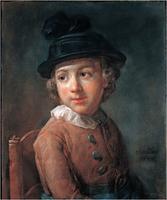
Portrait of a child
Jean-Baptiste-Simeon Chardin
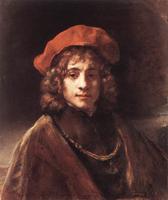
Titus, the Artist's son
Rembrandt
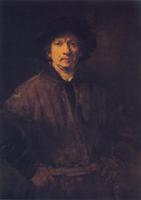
Large Self-portrait
Rembrandt
John Vaughan
John Michael Wright
Man with Hat in Outstretched Hand
Samuel Dirksz van Hoogstraten
Self portrait
Anton Graff
A Young Man Reaching for His Cap
Samuel Dirksz van Hoogstraten
A Young Man at a Table (possibly Govaert Flinck)
Rembrandt
The Rosary
Theodule Ribot