Analisi esperta di Composition di Salvador Dali
Stile: Surrealism · Genere: landscape
Expert Analysis of Salvador Dalí’s Composition (c. 1922–1927)
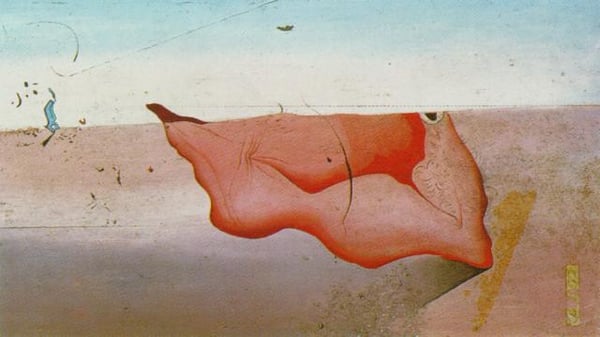
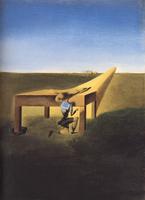
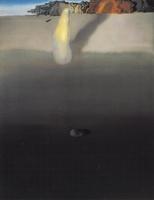
Dalí’s Composition, painted during his formative Early Years (1917–1927), is a crucial transitional work that prefigures the full-blown Surrealist landscapes for which he would later become famous. Though the style is still evolving, the painting already displays the hallmarks of Dalí’s budding surrealist vision: a deliberate disorientation of space, strange juxtapositions, and a meticulous, almost hyper-realistic technique borrowed from the Old Masters.
As a landscape, Composition transforms a natural setting into a psychological theater. Rather than depicting a faithful outdoor view, Dalí warps perspective, flattens depth, and introduces anomalous objects—perhaps biomorphic forms, shadowy figures, or distorted architectural elements—that hint at subconscious impulses. The palette is typically early Dalí: earthy browns, ochres, and muted blues, influenced by his early studies of Impressionism and the metaphysical art of Giorgio de Chirico.
What makes Composition significant within Surrealism is its role as a testing ground. Dalí was already rejecting pure academic realism in favor of a “paranoiac-critical” method: the deliberate cultivation of delusional associations within a coherent scene. The landscape becomes a stage where reality and dream collide, where everyday forms (rocks, trees, horizons) morph into ambiguous metaphors. This anticipates his mature masterpieces like The Persistence of Memory (1931), but here the surrealism is more tentative—a landscape not yet melted or overtly sexualized, but already uncanny.
In the broader context of Dalí’s career, Composition marks his break from his earlier Impressionist and Cubist experiments, and his move toward the psychological depth that would define Surrealism. It is a document of an artist on the cusp of revolutionary change, proving that even before Dalí officially joined the Surrealist group in 1929, his eye was already trained on the irrational, the marvelous, and the enigmatic.
Visivamente simili
20 opere con composizione e palette affini
The Transparent Simulacrum of the Feigned Image
Salvador Dali
The Dream of Venus
Salvador Dali
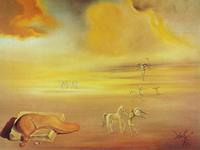
Angelic Landscape
Salvador Dali
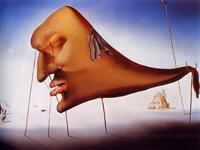
Sleep
Salvador Dali
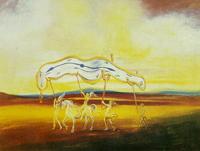
Wounded Soft Watch
Salvador Dali
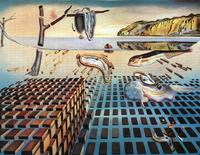
The Disintegration of the Persistence of Memory
Salvador Dali
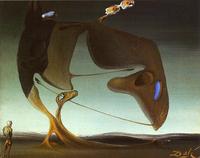
Surrealist Architecture
Salvador Dali
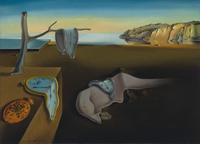
The Persistence of Memory
Salvador Dali
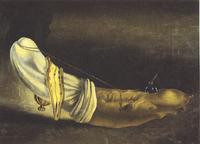
Anthropomorphic Bread
Salvador Dali
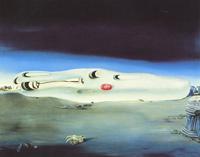
Diurnal Fantasies
Salvador Dali
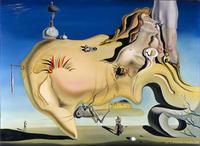
The Great Masturbator
Salvador Dali
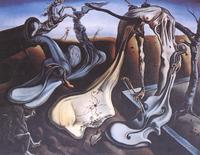
Spider Of The Evening
Salvador Dali
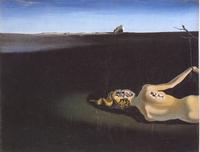
Woman Sleeping in a Landscape
Salvador Dali
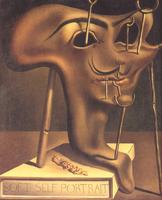
Soft Self-Portrait with Fried Bacon
Salvador Dali
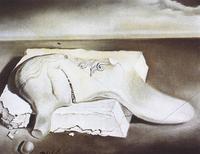
Soft Monster (Monstruo blando adormercido)
Salvador Dali
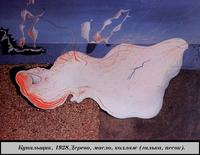
The Bather
Salvador Dali
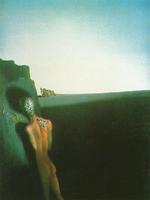
Solitude - Anthropomorphic Echo
Salvador Dali
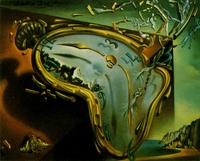
Melting Watch
Salvador Dali
Myself at the Age of Ten When I Was the Grasshopper Child
Salvador Dali
On the Seashore
Salvador Dali