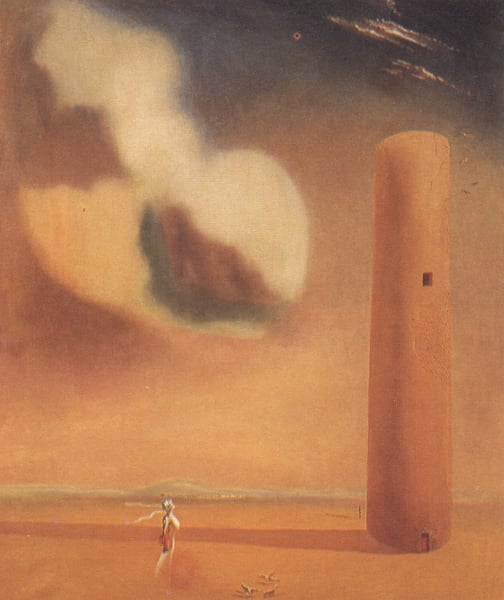
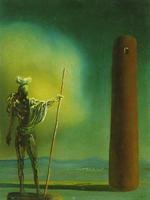
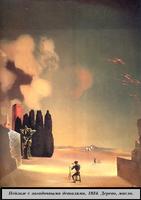
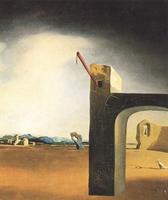
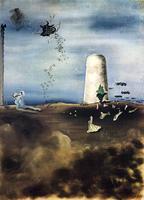
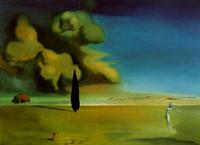
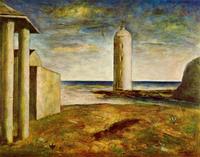
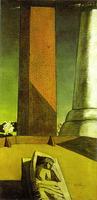
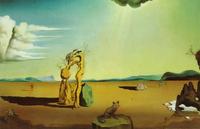
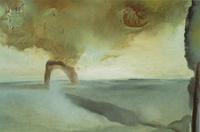
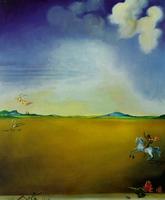
The significance of Enigmatic Elements in the Landscape lies in its embodiment of key Surrealist principles within the landscape genre, during Dali’s most active Surrealist period (1929–1940). The title itself—the only specific fact about the work—signals a deliberate departure from traditional landscape painting: where conventional landscapes depict recognizable, orderly nature, Dali introduces the “enigmatic,” a direct reference to the irrational, dream-like, and unexpected juxtapositions that define Surrealism. This period was when Dali developed his “paranoiac-critical method,” using double images and distorted perspectives to disrupt reality. By applying that method to a landscape—a genre historically associated with serene realism—Dali subverts expectations, transforming a familiar subject into a vehicle for the subconscious. The work thus demonstrates how Surrealism could infiltrate even the most conventional genres, making the familiar strange and forcing viewers to question their perception of reality. This fusion of the enigmatic with the landscape is a hallmark of Dali’s contribution to the movement’s aim of liberating the mind from rational constraints.