
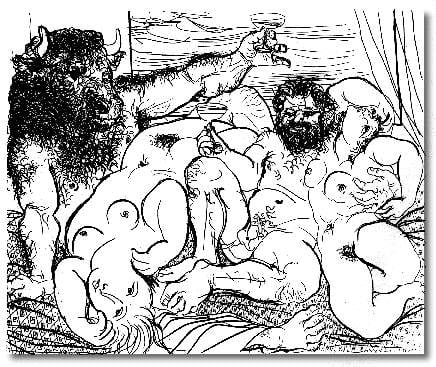
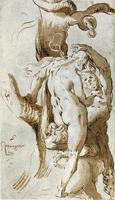
Bacchic scene with minotaur
Dettagli
Analisi esperta di Bacchic scene with minotaur di Pablo Picasso
Stile: Neoclassicism · Genere: genre painting
Expert Analysis: "Bacchic Scene with Minotaur" by Pablo Picasso
This work belongs to Pablo Picasso’s brief but pivotal Neoclassicist phase (roughly 1918–1925), which occurred alongside his Surrealist explorations. The painting is a striking hybrid: it combines the formal clarity and mythological gravitas of classical art with the irrational, dreamlike imagery that would soon define Surrealism.
Stylistic and Period Significance
Picasso’s Neoclassicism was a deliberate retreat from the fragmentation of Cubism, embracing instead solid, sculptural figures, balanced compositions, and references to ancient art. Here, the “Bacchic scene” (a revel connected to Bacchus/Dionysus) is rendered with the monumental simplicity of Greco-Roman reliefs. Yet the inclusion of the Minotaur—a half-human, half-bull creature from Cretan myth—pushes the work toward the Surrealist preoccupation with the subconscious, the monstrous, and the hybrid. This fusion is key: it shows Picasso using Neoclassical structure as a container for Surrealist content, anticipating later works like Guernica where classical order collides with violent chaos.
Iconographic Meaning
The Minotaur was a constant obsession for Picasso, often symbolizing raw instinct, masculinity, or the artist himself. In a Bacchic context, the creature joins a Dionysian frenzy—a celebration of ecstasy and irrationality. The juxtaposition of the Minotaur (a symbol of bestiality and labyrinthine mystery) with classical bacchantes (female followers of Bacchus) creates tension: order versus abandon, human versus animal, reason versus intoxication. This dichotomy captures the spirit of the 1920s, when Picasso balanced a return to classical discipline with a growing interest in the primal and the unconscious.
Genre and Execution
As a “genre painting,” it depicts everyday mythological life—though here the “everyday” is infused with symbolic weight. The figures are likely rendered in Picasso’s signature Neoclassical manner: heavy-limbed, mask-like faces, and simplified drapery, echoing Greek vase painting and the murals of Pompeii. Yet the composition hints at Surrealist dislocation—figures may overlap oddly, or the Minotaur may dominate in a way that disturbs the calm.
Significance
This painting is a crucial document of Picasso’s transitional period, demonstrating that Neoclassicism was not merely a nostalgic reaction, but a fertile ground for modern myth-making. It prefigures the Minotaur’s later role as a central figure in Picasso’s personal iconography (especially in his 1930s etchings for Vollard Suite). By blending the two movements, Picasso asserts that classicism itself can be reimagined through the lens of the irrational—a concept that would influence generations of artists who sought to fuse tradition with avant-garde experimentation.
Museum / Gallery
Visivamente simili
20 opere con composizione e palette affini
Minotaur attacking an amazone
Pablo Picasso
Minotaur caressing a woman
Pablo Picasso
Minotaur,drinker and women
Pablo Picasso
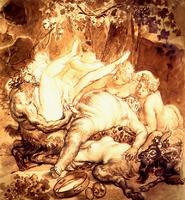
Silen, Satyr and Bacchanals
Karl Bryullov
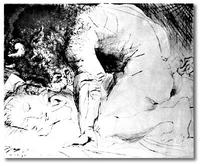
Minotaur caressing a sleeping woman
Pablo Picasso
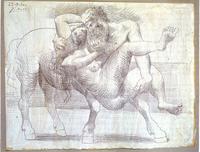
Abduction (Nessus and Deianeira)
Pablo Picasso
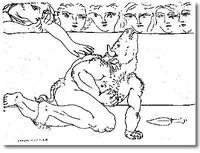
Minotaur is dying
Pablo Picasso
Lot and His Daughters (Genesis, XIX, 31 35)
Marc Chagall
Minotaur and woman behind a curtain
Pablo Picasso
Minotaur is wounded
Pablo Picasso
Silenus dancing in company
Pablo Picasso
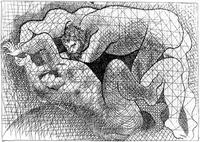
Man and woman
Pablo Picasso
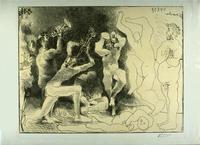
Dance of Fauns
Pablo Picasso
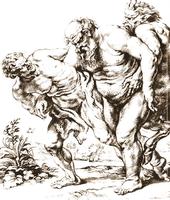
Silenus (or Bacchus) and Satyrs
Peter Paul Rubens
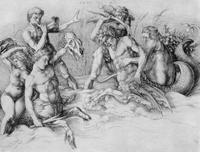
Fighting Seekentauren
Albrecht Durer
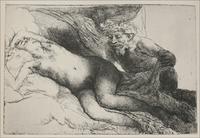
Antiope and Jupiter
Rembrandt
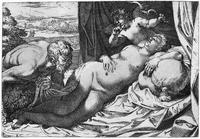
Jupiter and Antiope
Annibale Carracci
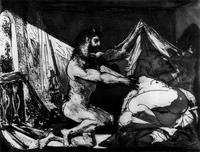
Faun unveiling a sleeping girl (Jupiter and Antiope, after Rembrandt)
Pablo Picasso
The Last Night
Oskar Kokoschka
The Original Sin (Adam and Eve)
Bartholomeus Spranger