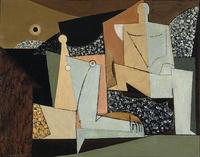
Expert Analysis: "Portrait of Sylvette David" by Pablo Picasso
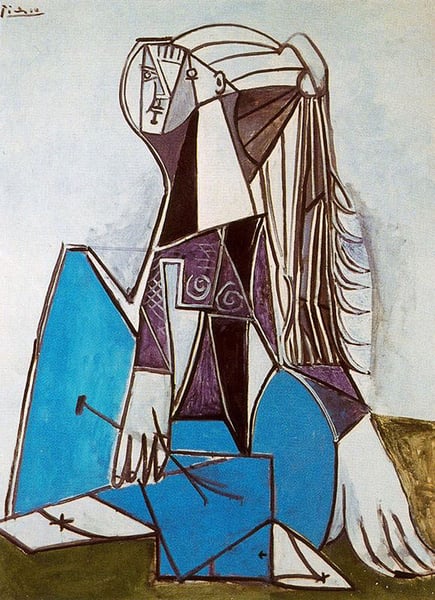
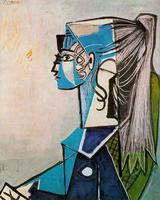
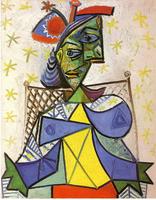
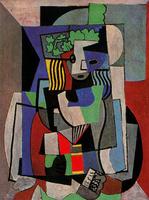
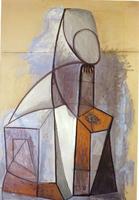
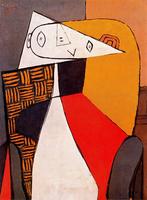
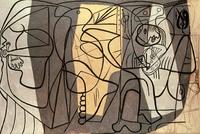
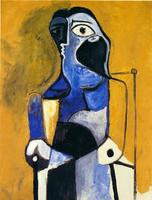
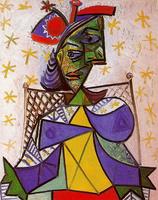
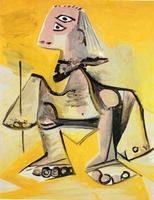
Painted during Picasso’s Later Years (1950s–1970s), this portrait of Sylvette David exemplifies the artist’s mature, highly distilled approach to Cubism. While early Cubism fragmented form through myriad facets and muted earth tones, this later work synthesizes those innovations into a bold, sculptural simplicity. The profile view of the face—with its elongated nose, single almond eye, and flowing hair—is rendered in broad, flat planes of color, demonstrating how Picasso merged Cubist geometry with a linear, almost graphic clarity. The significance lies in its ability to reduce a likeness to its essential pictorial architecture while retaining an expressive, modern elegance. Sylvette’s iconic ponytail and serene gaze became a recurring motif, and this portrait stands as a testament to Picasso’s lifelong reinvention of portraiture, proving that Cubism could evolve into a playful, decorative language without losing its revolutionary edge.