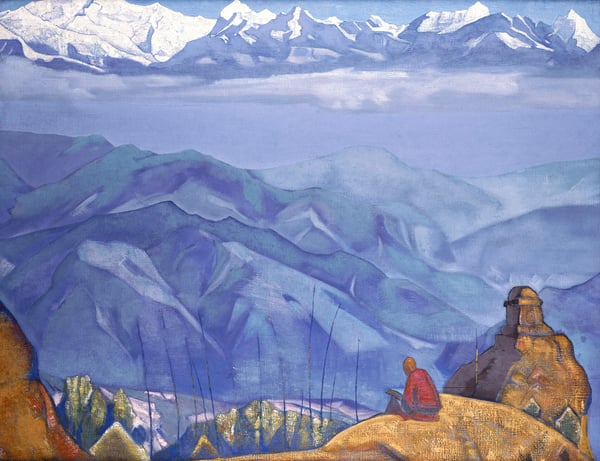
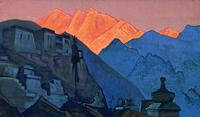
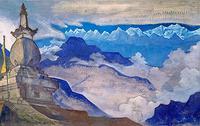
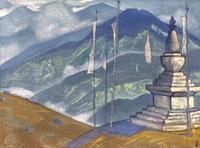
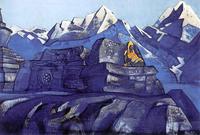
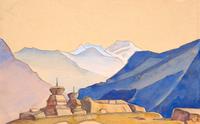
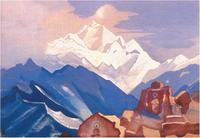
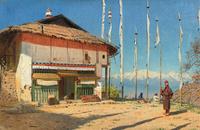
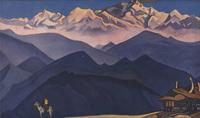
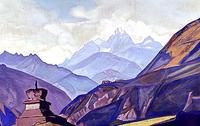
Based solely on the provided facts—“Book of Wisdom” by Nicholas Roerich, Style: Symbolism, Genre: landscape—the artwork’s significance lies in its fusion of landscape with Symbolist ideals.
As a Symbolist work, “Book of Wisdom” uses the landscape genre not to depict nature realistically, but as a vehicle for mystical or philosophical meaning. The title itself suggests that the natural scene functions as a tangible “book” from which spiritual or hidden wisdom can be read. This aligns with the Symbolist movement’s core goal: to express abstract ideas, emotions, or metaphysical truths through suggestive imagery rather than direct representation.
Nicholas Roerich was a key figure in Russian Symbolism and later in the Theosophical movement. His landscapes, often featuring stark, mountainous terrain or vast horizons, are emblematic of his belief in a unified spiritual reality. In “Book of Wisdom,” the landscape likely becomes a symbolic threshold—an invitation to contemplate the sublime and the eternal. The work is significant because it exemplifies how Symbolist landscapes transformed a traditional genre into a meditative, emblematic space, where the external world mirrors inner, esoteric knowledge.