Analisi esperta di Tibet di Nicholas Roerich
Stile: Symbolism · Genere: landscape
Expert Analysis of "Tibet" by Nicholas Roerich
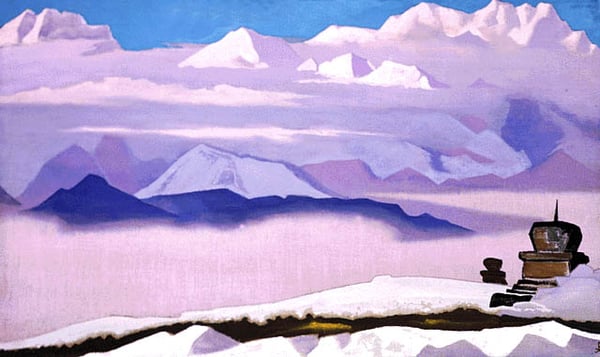
Nicholas Roerich’s Tibet exemplifies the core tenets of Symbolist landscape painting, where the natural world becomes a vessel for spiritual transcendence. Executed during his seminal Himalayan expeditions (1920s–1940s), the work transforms a topographically accurate mountain vista into a metaphysical vision.
Stylistic Significance
Roerich’s palette is central to the painting’s power: deep, luminous blues and violets for the peaks contrast with warm, earthy ochres and golds in the foreground, evoking the “sacred mountains” of Asian tradition. This chromatic choice—influenced by Theosophical color theory—imbues the scene with a sense of timelessness, as if the landscape exists beyond mortal perception. The composition is deliberately spare: a single, monumental snow-capped peak dominates the center, while low, rolling hills and a strip of water in the foreground guide the eye upward. Roerich’s brushwork alternates between precise, almost geometric layering for the distant mountains and softer, atmospheric washes for the sky, creating a palpable sense of altitude and silence.
Symbolism and Intent
For Roerich, Tibet was not merely a geographic location but a symbol of humanity’s spiritual quest. The painting’s title hints at a place revered in Theosophy as the abode of the “Great White Brotherhood” and hidden wisdom. The lone, unearthly light on the peak—a recurring motif in his work—represents enlightenment or the “Shambhala” of Buddhist prophecy. By stripping the landscape of human figures or narrative, Roerich invites the viewer to experience solitude as a precondition for transcendence.
Within the Symbolist Movement
Unlike many Symbolists who turned to mythological or psychological allegory, Roerich grounded his symbolism in real, painstakingly observed geography. His fusion of mystical content with landscape realism sets him apart: Tibet stands as a bridge between the ethereal yearnings of European Symbolism and the material reverence of Asian landscape tradition. It is significant for expanding the Symbolist vocabulary beyond the West, proving that spiritual yearning could be expressed through the “foreign” terrain of the Himalayas—a space seen in the early 20th century as both exotic and sacred.
In sum, Tibet endures as a masterpiece of Symbolist landscape because it makes the immaterial visible through pure, elemental form and color, inviting the viewer to join Roerich in a contemplative pilgrimage toward the infinite.
Visivamente simili
20 opere con composizione e palette affini
Tsong-kha-pa
Nicholas Roerich
Tibet. Flaming peak.
Nicholas Roerich
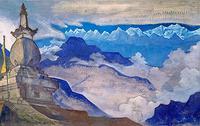
Rinchenpong
Nicholas Roerich
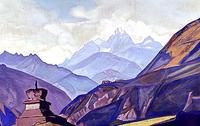
Gumran
Nicholas Roerich
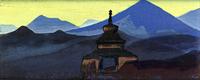
Stupa
Nicholas Roerich
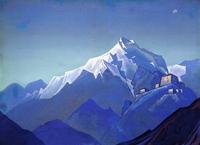
Himalayas. Blue mountains.
Nicholas Roerich
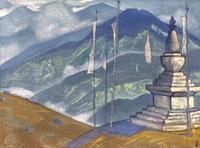
Waves of fog
Nicholas Roerich
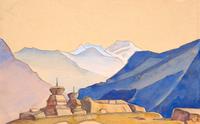
Karga
Nicholas Roerich
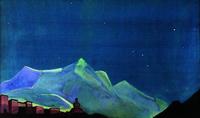
Royal monastery
Nicholas Roerich
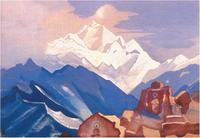
Ladakh
Nicholas Roerich
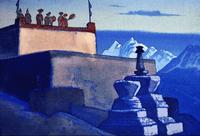
Evening Call
Nicholas Roerich
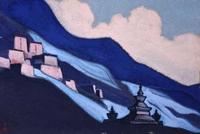
Tibet
Nicholas Roerich
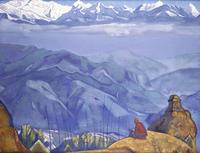
Book of Wisdom
Nicholas Roerich
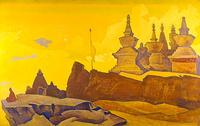
Sanga Chelling
Nicholas Roerich
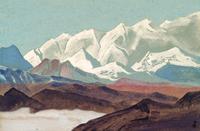
Himalayas. Chain of Kanchenjunga.
Nicholas Roerich
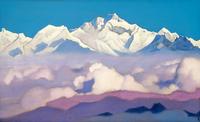
Kangchenjunga
Nicholas Roerich
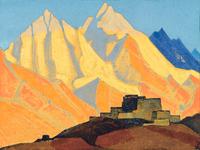
Sacred Himalayas
Nicholas Roerich
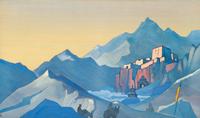
Path to Kailas. Monastery.
Nicholas Roerich
Mountain Abode
Nicholas Roerich
Tibet. Himalayas.
Nicholas Roerich