
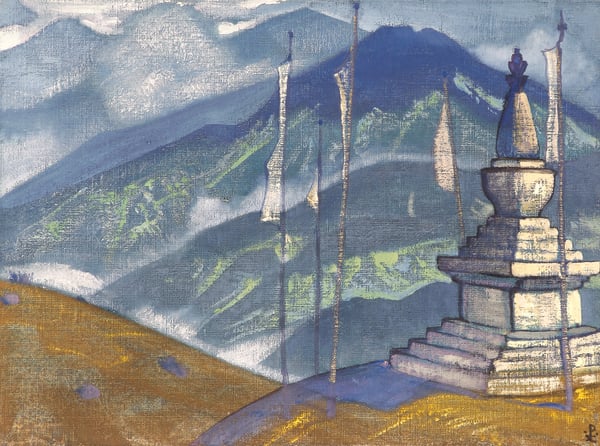
Expertenanalyse zu Nicholas Roerichs Waves of fog
Stil: Symbolism · Genre: landscape
Expert Analysis: Waves of Fog by Nicholas Roerich
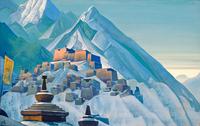
Nicholas Roerich’s Waves of Fog stands as a quintessential example of Symbolist landscape painting—a genre that, in Roerich’s hands, transcends mere topography to become a vehicle for spiritual and metaphysical contemplation. Painted within the Symbolist movement, the work exemplifies the period’s rejection of literal representation in favor of mood, suggestion, and inner resonance.
Significance within Symbolism
Symbolism sought to evoke the ineffable—emotions, dreams, and the unseen forces of nature—through form, color, and atmosphere. Waves of Fog achieves this by treating fog not as a meteorological phenomenon but as a living, fluid entity that blurs the boundaries between earth, sky, and spirit. The title’s use of “waves” implies motion and rhythm, transforming fog into a dynamic, almost oceanic force that rolls across the landscape. This anthropomorphic quality aligns with Symbolist ideals: nature is a mirror of the soul, and the fog becomes a metaphor for the veil between the visible world and a higher reality.
Genre as a means of transcendence
While classified as a landscape, the work subverts traditional landscape conventions. There are no distinct landmarks, human figures, or narrative elements. Instead, Roerich reduces the scene to its elemental components—mist, light, and horizon—creating a meditative space where the viewer is invited to lose themselves. The composition likely relies on a muted, monochromatic palette with subtle gradations, emphasizing texture and atmosphere over detail. This restraint is deliberate: it forces the eye inward, encouraging a contemplative state.
Roerich’s unique voice
Roerich, deeply influenced by Asian philosophy and the mysticism of the Russian North, often painted landscapes that felt both ancient and timeless. Waves of Fog resonates with his broader oeuvre, where nature is a sacred dialogue. The work’s significance lies in its ability to capture the liminal—the moment between visibility and obscurity, solidity and dissolution. It embodies the Symbolist goal of making the invisible visible, and in doing so, it elevates the landscape genre from documentation to a spiritual experience.
In short, Waves of Fog is a masterful distillation of Symbolist principles: it transforms a natural element into a poetic, transcendent symbol, and invites the viewer to see beyond the surface into the soul of the world.
Museum / Gallery
Visuell ähnlich
20 Werke mit ähnlicher Komposition und Farbpalette
Rinchenpong
Nicholas Roerich
Suburgan of Tashiding
Nicholas Roerich
Tibet. Flaming peak.
Nicholas Roerich
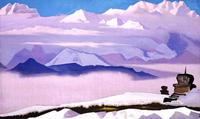
Tibet
Nicholas Roerich
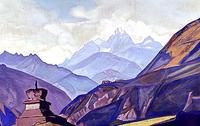
Gumran
Nicholas Roerich
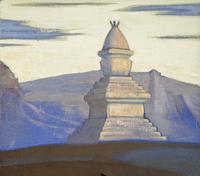
Stupa near Sharugen
Nicholas Roerich
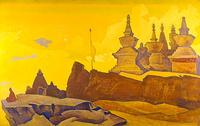
Sanga Chelling
Nicholas Roerich
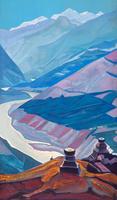
Chandra-Bhaga (Path to Triloknath)
Nicholas Roerich
Tibet
Nicholas Roerich
Stupa
Nicholas Roerich
Buddhist Temple in Darjeeling
Vasily Vereshchagin
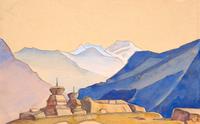
Karga
Nicholas Roerich
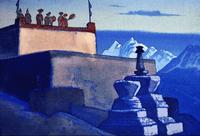
Evening Call
Nicholas Roerich
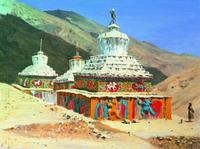
Posthumous monuments in Ladakh
Vasily Vereshchagin
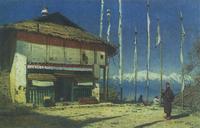
Buddhist temple in Darjeeling. Sikkim
Vasily Vereshchagin
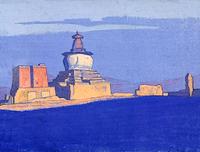
Stupa at Chung-Chu
Nicholas Roerich
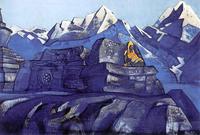
Tsong-kha-pa
Nicholas Roerich
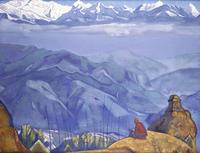
Book of Wisdom
Nicholas Roerich
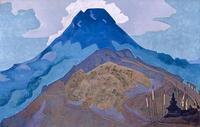
Namze
Nicholas Roerich
Tibet. Himalayas.
Nicholas Roerich