Expert Analysis of "Building a City" by Nicholas Roerich
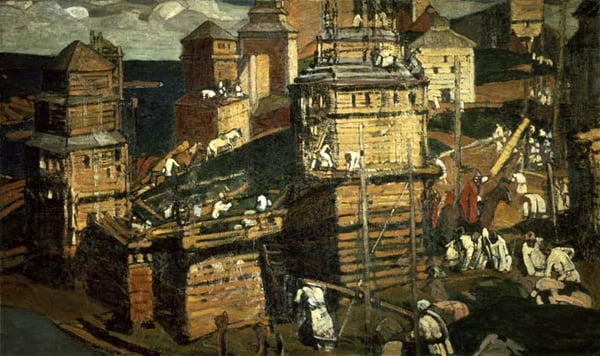
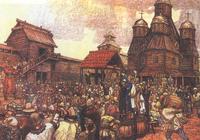
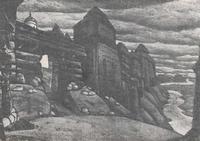
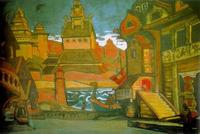
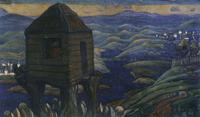
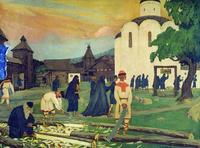
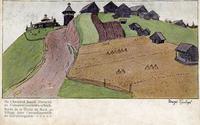
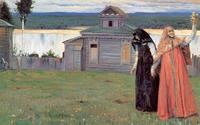
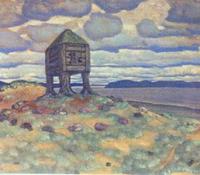
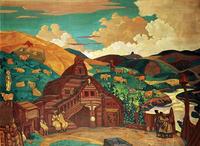
Nicholas Roerich's "Building a City" is a significant work within the Art Nouveau (Modern) movement, notable for its fusion of the movement's decorative, organic aesthetic with the narrative immediacy of genre painting. While Art Nouveau is often associated with ornamental, flowing lines and a focus on natural forms, Roerich here applies that stylistic vocabulary to a scene of human labor and construction—a subject typically grounded in realism or social commentary. This juxtaposition is key to the work's importance: it demonstrates how Art Nouveau could transcend purely decorative or symbolic subjects to engage with themes of progress, community, and the built environment.
As a genre painting, "Building a City" captures a moment of collective effort, yet Roerich’s stylized treatment—likely characterized by rhythmic, sinuous outlines and a harmonious, muted palette—elevates the ordinary into something mythic and timeless. The work’s significance lies in its ability to reconcile the modern, forward-looking impulse of Art Nouveau (with its emphasis on craftsmanship and integrated design) with a traditional genre subject, thereby expanding the movement’s thematic range. It reflects the period’s fascination with unity between art and life, suggesting that even the most mundane act of construction can be imbued with spiritual and aesthetic resonance.