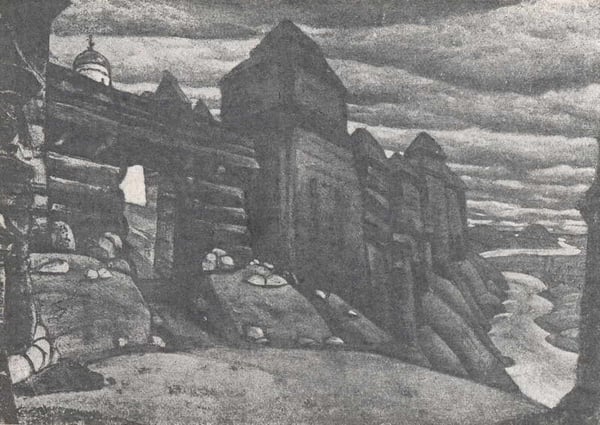
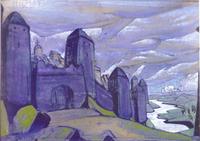
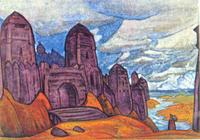
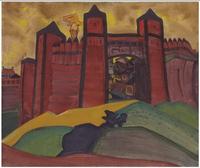
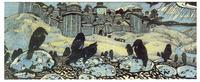
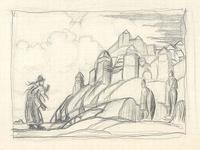
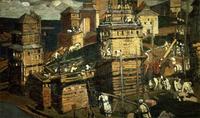
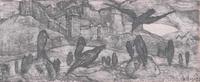
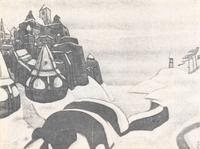
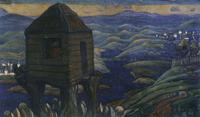
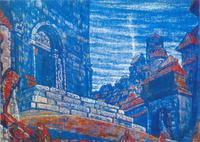
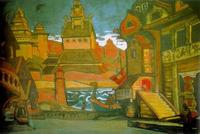
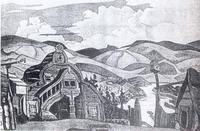
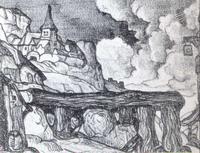
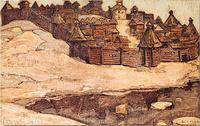
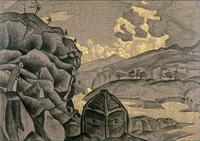
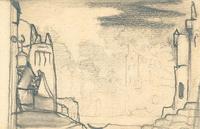
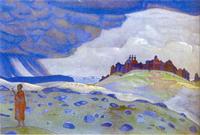
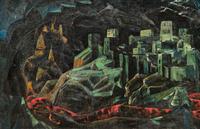
Nicholas Roerich’s City Wall exemplifies the Art Nouveau (Modern) ethos through its integration of decorative, organic motifs with a clear architectural purpose. As a design work, it reflects the movement’s ambition to blur the boundaries between fine art and applied design—a key tenet of Art Nouveau. Roerich’s composition likely emphasizes sinuous, flowing lines and a stylized, symbolic representation of the wall, transforming a functional barrier into an ornamental, almost mystical element. This aligns with his broader interest in spirituality and ancient cultures, yet here it is filtered through the modern, decorative language of Art Nouveau. The piece stands out for its ability to infuse a static architectural feature with the rhythmic, nature-inspired energy characteristic of the style, demonstrating how designers of the period sought to elevate everyday environments into holistic works of art.