
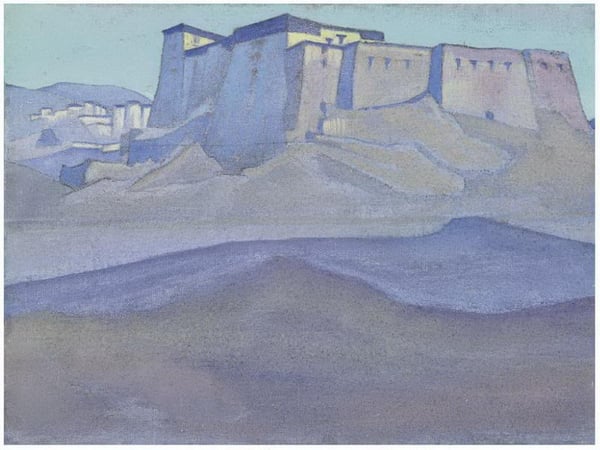
Analisi esperta di Dzong di Nicholas Roerich
Stile: Symbolism · Genere: landscape
Analysis of "Dzong" by Nicholas Roerich
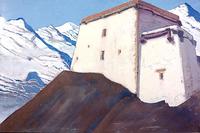
As a Symbolist landscape, "Dzong" exemplifies Nicholas Roerich’s distinctive contribution to the movement: the fusion of natural grandeur with spiritual allegory. The work’s significance lies in how it transforms a topographically accurate depiction of a Tibetan fortress-monastery into a visual meditation on transcendence. Roerich’s signature use of luminous, often starkly contrasting colors—deep blues, icy whites, warm golds—imbues the scene with a dreamlike, otherworldly quality, elevating the physical landscape into a symbol of inner pilgrimage and cosmic harmony. Within Symbolism, this piece stands out for its synthesis of Eastern mystical motifs with a Western Symbolist vocabulary, marking a cross-cultural expansion of the style’s concerns beyond European mythology. The solitary, towering structure set against vast, unpeopled mountains underscores the Symbolist preoccupation with solitude, the sublime, and the search for hidden truths, making "Dzong" a quintessential example of Roerich’s role as a painter who used landscape not as mere scenery, but as a gateway to the spiritual.
Visivamente simili
20 opere con composizione e palette affini
Sanctuaries and Citadels
Nicholas Roerich
Sanctuaries and Citadels
Nicholas Roerich
Castle of Ladakh
Nicholas Roerich
Mountain Abode
Nicholas Roerich
Monastery in the mountains
Nicholas Roerich
Tibet stronghold
Nicholas Roerich
Sanctuaries
Nicholas Roerich

Lhasa
Nicholas Roerich
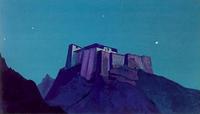
Stronghold of Tibet
Nicholas Roerich
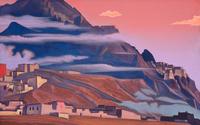
Shekar Dzong
Nicholas Roerich

Morning star
Nicholas Roerich
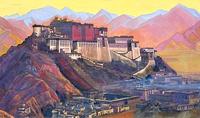
Tibet stronghold (Potala)
Nicholas Roerich
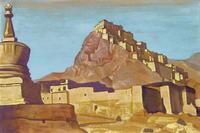
Sanctuaries and Citadels
Nicholas Roerich

Monastery (Brahmaputra)
Nicholas Roerich
Mountain Abode
Nicholas Roerich
Island of Rest
Nicholas Roerich
Chiktan citadel in Himalayas
Nicholas Roerich

Chatu Gompa
Nicholas Roerich
Tibet
Nicholas Roerich
Temple
Nicholas Roerich