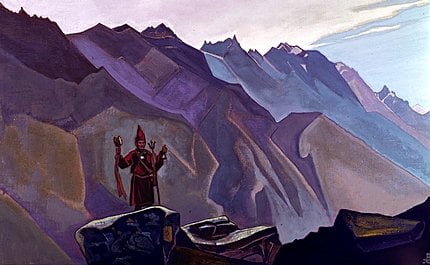
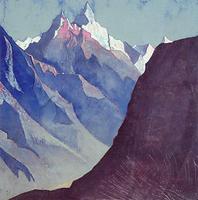
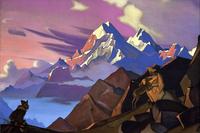
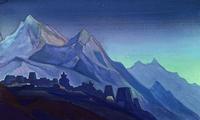
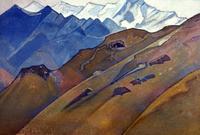
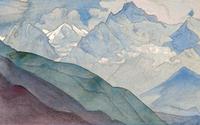
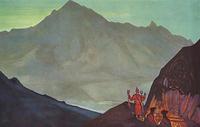
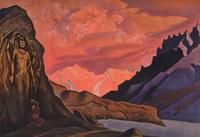
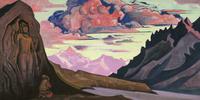
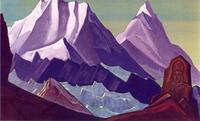
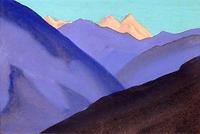
In this Symbolist religious painting, Hill of Tara by Nicholas Roerich achieves significance by transforming a geographical landmark into a spiritual threshold. The work exemplifies Symbolism’s rejection of literal representation in favor of inner vision: the hill is rendered not as a mere landscape but as a sacred, luminous mound that seems to pulse with ancient, ritualistic energy. Roerich’s palette—typically resonant with deep blues, golds, and ethereal whites—casts the scene in a transcendent, almost otherworldly light, reinforcing the idea that the site is a conduit between the earthly and the divine. As a religious painting, it elevates a historical Celtic seat of kings into a universal symbol of pilgrimage and revelation, aligning with Roerich’s broader theosophical interests in the unity of world faiths. The work’s significance lies in how it synthesizes a specific geographic locus with timeless metaphysical longing, making the visible world a doorway to the invisible.