Analisi esperta di Mountany landscape di Nicholas Roerich
Stile: Symbolism · Genere: landscape
Expert Analysis of "Mountany landscape" by Nicholas Roerich
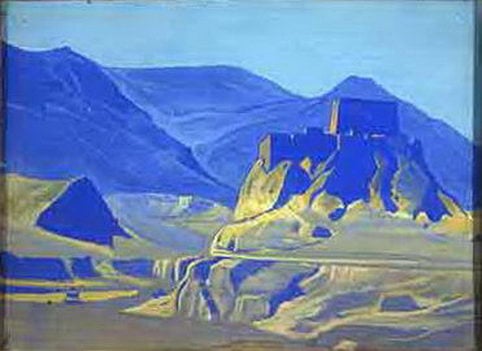
Nicholas Roerich’s Mountany landscape exemplifies the Symbolist movement’s departure from direct representation toward spiritual and emotional resonance. As a landscape within the Symbolist canon, the work transcends mere topographical depiction, using nature as a vessel for metaphysical meaning. Roerich, deeply influenced by Eastern philosophy and theosophy, consistently portrayed mountains as sacred thresholds—places of transcendence, meditation, and cosmic order.
Significance within Symbolism
The painting’s significance lies in its ability to transform a physical vista into a symbolic statement. Symbolist landscapes rejected naturalistic detail in favor of mood, atmosphere, and hidden meaning. Here, the mountain likely represents an eternal, unyielding force—both majestic and remote—evoking themes of spiritual striving, the sublime, and the passage between earthly and divine realms. Roerich’s simplified forms, muted yet luminous palette, and sweeping, often monochromatic tonalities are hallmarks of Symbolist visual language, prioritizing inner vision over external accuracy.
Role of the Landscape Genre
Within the landscape genre, Roerich’s work is groundbreaking for infusing a traditional subject with profound iconographic weight. Unlike Impressionist or Realist landscapes that capture fleeting effects or social realities, Mountany landscape invites contemplation of the eternal. The absence of human figures amplifies the sense of solitude and the overwhelming power of nature, aligning with Symbolism’s interest in the ineffable and the mystical.
Conclusion
This artwork is significant as a quintessential Symbolist landscape—a visual meditation that uses the mountain as a symbol of spiritual ascent and cosmic harmony. Roerich’s synthesis of East Asian compositional calm with Western Symbolist introspection marks the painting as a pivotal work in the movement’s exploration of nature as a gateway to the transcendent.
Visivamente simili
20 opere con composizione e palette affini
Lhasa
Nicholas Roerich
Himalayas
Nicholas Roerich
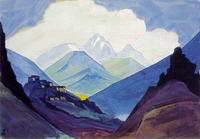
Chan-La. Nek.
Nicholas Roerich
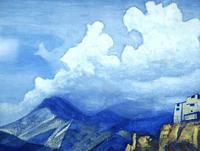
Mountain Abode
Nicholas Roerich
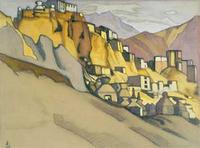
Lamayuru Monastery
Nicholas Roerich
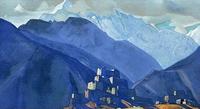
Monastery in Himalayas
Nicholas Roerich
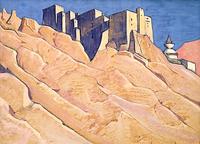
Sanctuaries and Citadels
Nicholas Roerich
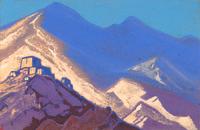
Dark-blue mountains and buildings on the hiil
Nicholas Roerich
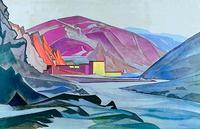
Sharugen Monastery
Nicholas Roerich
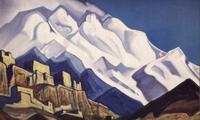
Tibet. Monastery in the mountains. (Rakaposhi)
Nicholas Roerich
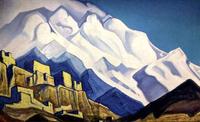
Tibet monastery
Nicholas Roerich
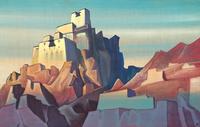
Castle of Ladakh
Nicholas Roerich
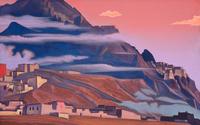
Shekar Dzong
Nicholas Roerich
Dzong
Nicholas Roerich
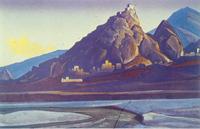
Maulbek
Nicholas Roerich
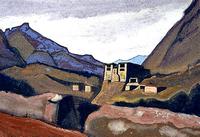
Himalayas
Nicholas Roerich
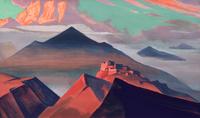
Tent Mountain
Nicholas Roerich
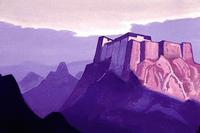
Mountain Abode
Nicholas Roerich
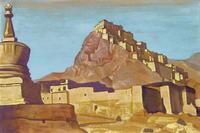
Sanctuaries and Citadels
Nicholas Roerich
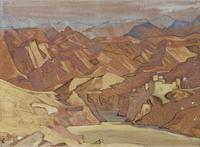
Sanctuaries and Citadels
Nicholas Roerich