Expert Analysis: "Mary Magdalene at the door of Simon the Pharisee" by Dante Gabriel Rossetti
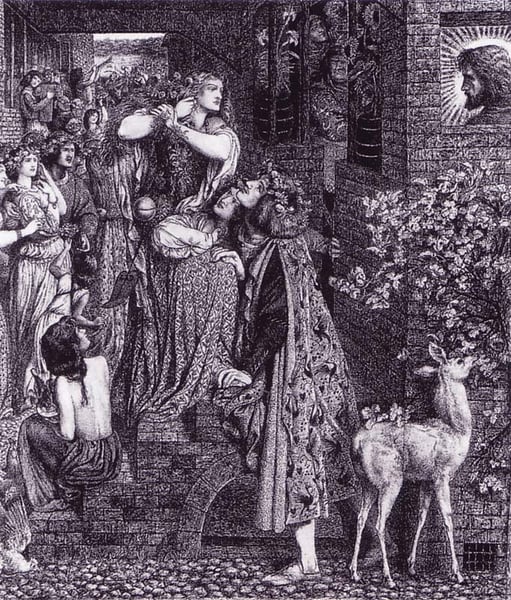
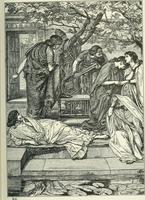
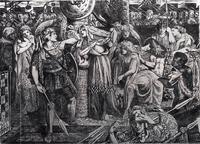
This work stands as a significant example of Romantic religious painting, a genre that in the 19th century often reimagined biblical narratives through a lens of intense personal emotion and psychological drama. Rossetti, a central figure of the Pre-Raphaelite movement (itself an offshoot of Romanticism), here departs from traditional iconography by focusing on a moment of liminal tension: Mary Magdalene at the threshold of Simon the Pharisee’s house, rather than the conventional scene of her anointing Christ’s feet.
Within the Romantic style, the painting’s significance lies in its privileging of inner experience over doctrinal exposition. The doorway becomes a charged symbol of spiritual and emotional transition—a threshold between sin and repentance, isolation and community. Rossetti’s treatment emphasizes the solitary, contemplative figure of Mary, her hesitation and longing rendered with a psychological depth typical of Romanticism’s fascination with individual consciousness. The religious genre is thus transformed from didactic narrative into a meditation on human frailty, redemption, and the poignancy of personal crisis.
The work also reflects Romanticism’s broader rejection of Neoclassical rigidity: instead of idealized forms and clear moral allegory, Rossetti invests the scene with a subtle, almost melancholic intimacy. Mary is not a penitent saint in static pose but a complex, conflicted woman—a hallmark of Romantic art’s valorization of subjective truth. By choosing this precise, unillustrated moment, Rossetti forces the viewer to confront the emotional weight of biblical story, making the spiritual journey feel immediate and profoundly human. This fusion of Romantic sensibility with religious subject matter elevates the painting from mere illustration to a powerful statement of faith as lived experience.