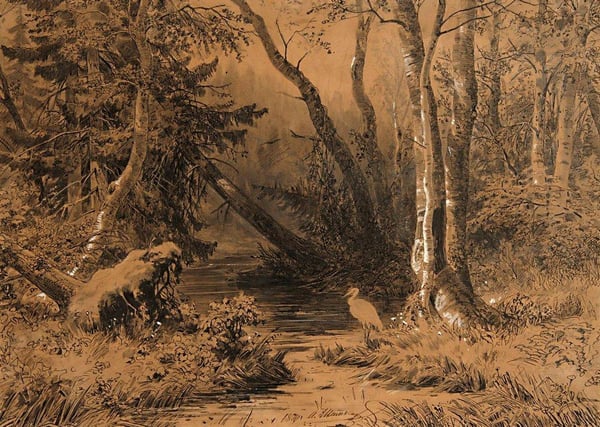
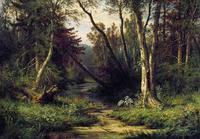
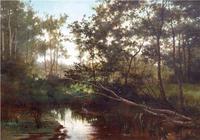
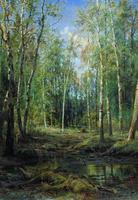
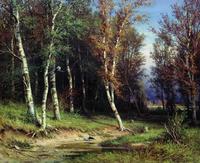
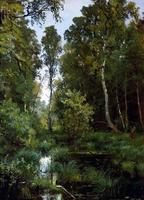
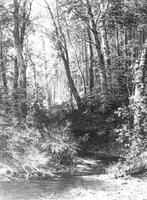
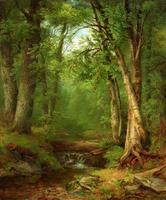
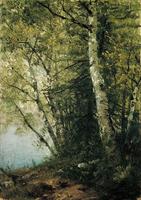
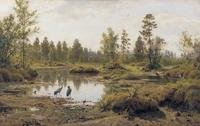
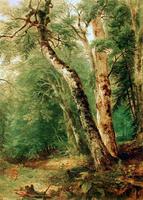
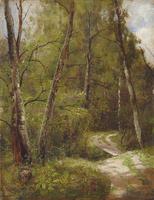
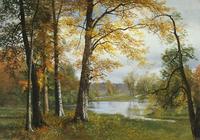
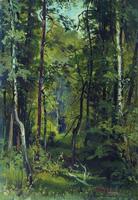
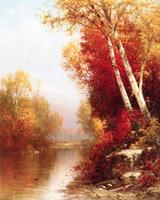
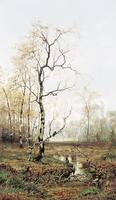
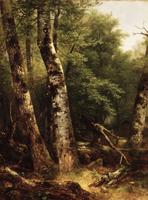
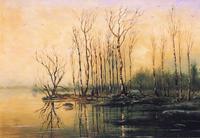
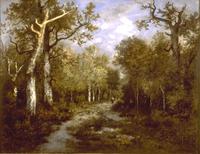
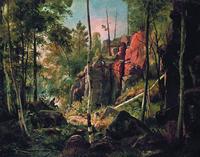
As a Realist landscape, Ivan Shishkin’s “Backwoods” stands as a definitive example of the movement’s commitment to unembellished, truthful observation of nature. Working within the Russian Realist tradition, Shishkin eschewed romanticized or dramatic vistas in favor of a sober, almost scientific attention to the dense, untamed forest interior. The painting is significant for its meticulous rendering of textures—the rough bark of centuries-old trees, the tangled undergrowth, and the filtered light piercing through the canopy—which conveys not just a scene but a palpable sense of air, moisture, and isolation. By focusing on the raw, silent majesty of the wilderness rather than any human narrative, “Backwoods” elevates the simple genre of landscape into a meditation on the sublime power of the natural world, a hallmark of the period’s realistic approach.