Expert Analysis of "Forest Landscape with Herons" by Ivan Shishkin
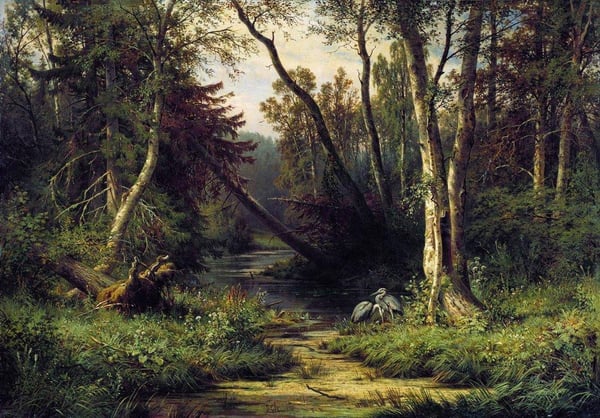
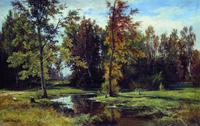
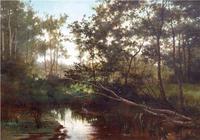
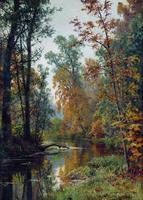
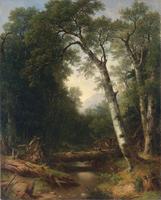
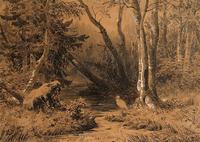
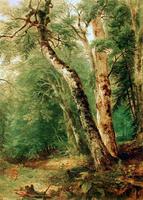
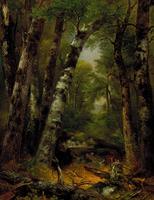
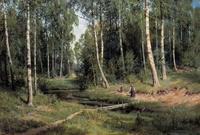
Ivan Shishkin’s Forest Landscape with Herons stands as a quintessential example of 19th-century Russian Realism, a movement that sought to depict nature and everyday life with unvarnished truth. Within the landscape genre, Shishkin’s work is significant for its near‑scientific precision and deep reverence for the Russian wilderness.
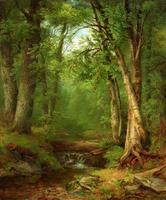
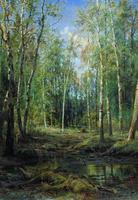
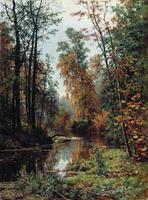
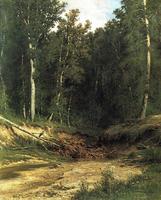
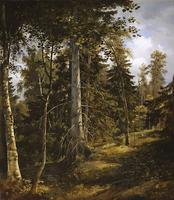
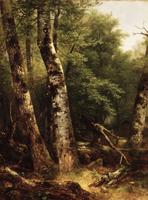
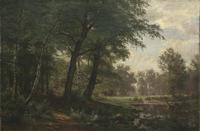
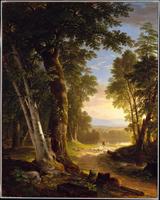
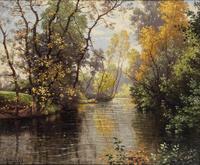
The painting exemplifies the Realist commitment to objective observation: every pine needle, patch of moss, and reflective pool is rendered with meticulous detail. Shishkin’s ability to capture the varied textures of bark, foliage, and water—while maintaining a cohesive atmospheric effect—elevates the work beyond mere documentation. The inclusion of herons, poised with quiet stillness, adds a subtle narrative layer, anchoring the vast forest in a specific moment of animal life.
What makes Forest Landscape with Herons particularly notable within Shishkin’s oeuvre and the Realist period is its synthesis of grandeur and intimacy. The composition balances the towering, almost cathedral-like trees with the delicate, transient presence of the birds. This dual focus reflects the Realist belief that truth resides not only in heroic landscapes but also in the quiet, often overlooked details of the natural world. Shishkin’s work thus becomes a meditation on the enduring, unmediated beauty of the Russian forest—a legacy that solidified his reputation as the “singer of the forest” and a master of verisimilitude in landscape painting.