Analisi esperta di Taiga di Ivan Shishkin
Stile: Realism · Genere: landscape
Expert Analysis of "Taiga" by Ivan Shishkin
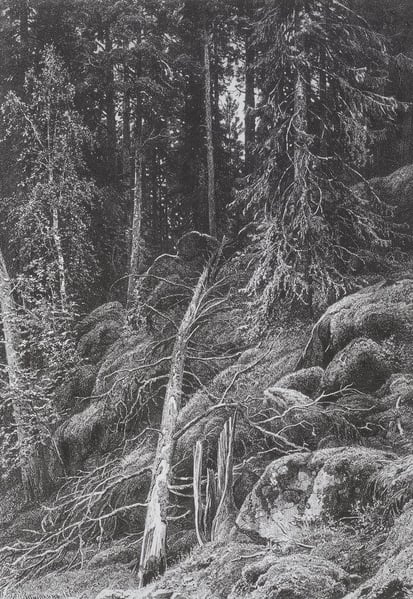
Ivan Shishkin’s "Taiga" is a masterwork of 19th-century Russian Realism, and its significance lies in how it transforms a specific, untamed landscape into a symbol of national identity and a testament to the painter’s unyielding dedication to natural truth. As a landscape within the Realist style, the painting exemplifies the movement’s core tenets: a near-scientific observation of nature, meticulous detail, and an avoidance of romantic idealization—yet it simultaneously evokes a sense of sublime majesty.
Stylistic Significance (Realism and Detail)
Shishkin, often called the “singer of the forest,” approached the taiga—the vast boreal forest of Siberia—with the precision of a botanist and the devotion of a poet. Every pine needle, patch of moss, and fractured bark surface is rendered with photographic clarity. This hyper-detailed technique is not mere decoration; it grounds the viewer in the physical reality of the wilderness. By eliminating artificial composition or dramatic lighting effects, Shishkin aligns with Realism’s goal of depicting the world as it is, without theatricality. The dense, layered foreground and recessive middle ground create a palpable sense of depth, inviting the eye to wander through the forest as if walking into its cool, shadowed interior.
Thematic Significance: The Sublime Wilderness
"Taiga" is significant because it elevates a specific ecosystem—the Siberian taiga—to an icon of Russian identity. In an era when Russian artists were forging a distinct national voice separate from Western European traditions, Shishkin’s forests became a symbol of the country’s immense, raw, and unconquered heartland. Unlike more pastoral European landscapes, the taiga in this painting feels primeval and indifferent to human presence. There are no paths, no figures, no signs of cultivation. This emphasizes the sublime: nature’s scale dwarfs the viewer, inspiring both awe and a sense of humility. The muted, earthy palette—dark greens, browns, and soft gray light filtering through the canopy—further communicates the quiet endurance of the forest.
Why It Matters
"Taiga" is a landmark work because it captures the essence of the Realist landscape while pushing it toward a philosophical meditation on nature’s power. Shishkin’s ability to convey the texture of bark, the play of filtered light, and the silence of deep woods made him the definitive painter of the Russian forest. This painting stands as a key example of how Realism, often associated with social or urban subjects, could also be a vehicle for exploring the natural world with uncompromising fidelity—and in doing so, it helped define the visual language of Russian landscape art for generations.
Visivamente simili
20 opere con composizione e palette affini
Thickets
Ivan Shishkin
Wind Fallen Trees
Ivan Shishkin
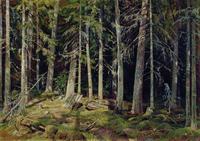
Forest. Mounds
Ivan Shishkin
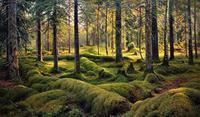
Forest cemetery
Ivan Shishkin
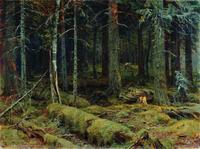
Dark Forest
Ivan Shishkin
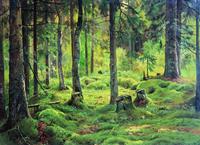
Deadwood
Ivan Shishkin
Fir
Ivan Shishkin
Fir forest
Ivan Shishkin
Forest in Mordvinovo
Ivan Shishkin
Fir in the Shuvalov Park
Ivan Shishkin
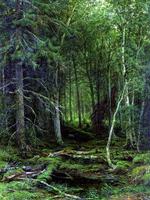
Backwoods
Ivan Shishkin
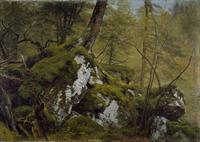
Study of a Wood Interior
Asher Brown Durand
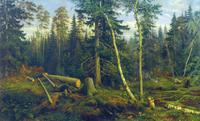
Logging
Ivan Shishkin
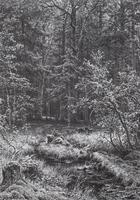
Forest swamp
Ivan Shishkin
Forest
Ivan Shishkin
Coniferous Forest. Sunny Day
Ivan Shishkin
Branches
Ivan Shishkin
In the fir forest
Ivan Shishkin
Landscape with stump
Ivan Shishkin
Fir forest
Ivan Shishkin